Africa

Kenya Masai Mara Posters, Art Prints

kenya art print Kenya Masai Mara Posters, Art Prints

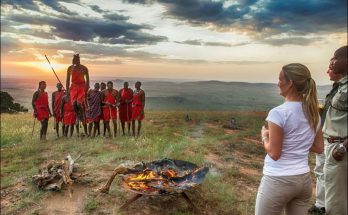
Kenya Art Print
Lazlo Emmerich
54 in. x 30 in.
Buy This Allposters.com

kenya masai mara art print Kenya Masai Mara Posters, Art Prints

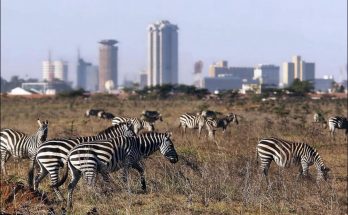
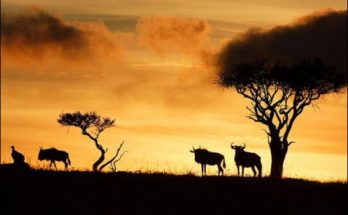
Wildebeest Migration, Masai Mara, Kenya
Dee Ann Pederson
16 in. x 12 in.
Buy This Allposters.com

There are currently about 2,400 left in Africa, down from 3,400 in 1991. The continent’s white rhino population, on the other hand, continues to rise and now totals about 7,500. Many southern African conservationists believe that the long-term solution to the rhino’s plight is farming. At next month’s Convention on Trade in Endangered Species conference in Harare, they will push to legalize trade in white rhino products, claiming that the white rhino are perfect candidates for farming. They are more numerous than black rhino and, if farmed responsibly, can safely grow back their horns in three years. Customers in Asia would be satisfied, they say, and local farmers would earn enough money to continue buying land for rhino cultivation.

The Rediscovery of Africa

mystic south africa The Rediscovery of Africa

Mystic South Africa
Gayle Ullman
22 in. x 36 in.
Buy This Allposters.com

Little over a hundred and fifty years ago a young scots surgeon named Mungo Park, more dead than alive from months of quenching travel, rode through Saharan sand and thorn into the remote city of Segu on the upper reaches of the river Niger.

“Looking forwards,” he would write, “I saw with infinite pleasure the great object of my mission — the long sought-for majestic Niger, glittering to the morning sun, as broad as the Thames at Westminster, and flowing slowly to the eastward.”

Ever since Ptolemy, sixteen centuries before, men had written on maps that the Niger flowed to the westward. Arabs of the Middle Ages, true enough, had known the middle course of the Niger for what it really was; but Europe, newly considering Africa in times of mercantile expansion, could be sure of nothing of its geography but the outline of the coast, and a little, here and there, of the obscure lands beyond.

“The course of the Niger, the places of its rise and termination, and even its existence as a separate stream are still undetermined,” declared the prospectus of the African Association, founded in London in 1790 for “Promoting the Discovery of the Interior Parts of Africa,” and it resolved that one of its explorers “should ascertain the course, and if possible, the rise and termination of that river.”

Mungo Park perished on the Niger before he could plot its course to the sea, but others followed. Within seventy years or so the main geographical facts were fixed and clear upon the continental map, and one misconception after another was corrected, one zone of ignorance after another filled with detail. African discovery took its place among the triumphs of the nineteenth century. The geographical myths and legends disappeared; in place of these, mapmakers could record the knowledge of sand and swamp, forest and savannah, snow-capped mountain range and bracing highland that the discoverers had won.

A similar process of discovery is now occurring, about a hundred years later, in the field of African history. Historians and archeologists — British, French, African, Italian, Belgian, American — have embarked on journeys of historical discovery that parallel the geographical ventures of Park and Clapperton, Caillié and Barth, Livingstone, Stanley, and so many more. What the nineteenth century achieved for the geography of Africa the twentieth is well towards achieving for its history; and once again the truth these pioneers are finding has proved, often enough, the reverse of what the outside world had generally believed.

Thus the chart of African history, so lately bare and empty and misleading as the maps once were, begins to glow with illuminating detail. Bearded monsters and “men whose heads do grow beneath their shoulders” begin to disappear; and humanity, in all its smallness and its greatness, begins to emerge. And it begins to be seen, if fleetingly and partially as yet, that the writing of African history is not only possible and useful, but will be as well a work of rediscovery — the rediscovery of African humanity.

Continue Reading >>

More Travel Articles and Tips >>

Tunisia: Sidi Bou Said Photographic Print

tunisia sidi bou said Tunisia: Sidi Bou Said Photographic Print

Sidi Bou Said, Tunisia Photographic Print
Davies, Ethel
12 in. x 9 in.
Buy This Allposters.com

Tunusia is situated between Algeria and Libya and has 750 miles of coastline on the Mediterranean. It is an oasis in many ways. Its acceptance of the Western world contrasts with the attitude of its fiercely nationalistic neighbors Algeria and Libya; its modern hotels from Tunusia to Hammamet and on down the coast to Sousse, Sfax and Djerba are among the best in Africa; it retains the old French colonial influence but loses none of its authentic Arab flavor.

You can spend vacation time in Tunusia in almost any way imaginable – on the wide sandy beaches, drinking smooth, inexpensive local wine and then, when the sun goes down, wander back through the orange groves to the hotel and dance outside under the stars. If you are robust and an eager sightseer, you can trek down into Sahara, and really get away from it all.

Much of Tunusia, like the hotels, the floodlit expressway from the airport to center of Tunis and the international theater in Hammamet is 20th century; but women are still veiled, and blinkered camels lumber round turning the grindstones of ancient mills. Much, of course, goes even further back. The winding maze of souks and markets seem ncredibly old, but are not as old remains of Carthage, Dougga, Kairouan and beautiful Colosseum at El Djem.

An aspect of Tunusia which makes it different is its sophistication: there is an elegance and the cuisine and environment which is missing elsewhere in the southern Mediterranean. This is perhaps best summed up in one unwritten, but universally observed, law – no new hotel may be built higher than the surroundings palm trees. So the new blends with, but never obscures, the old.

Travel Tips for Tunisia

tunisia palm trees sand dunes Travel Tips for Tunisia


Palm Trees and Sand Dunes at Dawn, Douz, Tunisia
Walton, Wayne
24 in. x 18 in.
Buy This Allposters.com

Sitting on the North West coast of Africa, Tunisia is a fast growing holiday destination attracting thousands of visitors every year. Package holiday makers throng the beaches throughout the summer months and the tourist economy is booming. But there are a few facts that the regular visitor gets to find out about that don’t appear in the glossy brochures, and probably won’t feature in the traditional welcome meeting.

The Culture

This is a Muslim country. Albeit the most liberal and easy going one. But it is still a Muslim country that observes the tradition of Ramadan and the bi annual holidays of Eid.

For independent travellers to Tunisia it is a wise move the check the Islamic calendar for the potential dates of these holidays. Some travel services may be affected, as will the hours of opening for the local banks. Many places close during the fasting hours of Ramadan. Women travellers should bear in mind that this is a culture where women still, in the main, cover up and many still wear headscarves.

Bare shoulders and shorts are tolerated in the tourist resorts but if you are going in land then dress respectfully and wear long loose clothing. Also beach wear is fine for the beach and the pool but walking across the main round and into the supermarket in a sarong is not really the thing to do here and may cause some unwanted attention.

How to Get Around

The Tunisian rail system is cheap and reliable, as are the smaller metro trains. Visitors can travel the length of the country by train. Be warned these are not luxury modes of transport and are not air conditioned, so travel in the height of the summer can be a pretty sticky experience. Taxi drivers seem to have two prices, tourist and local. The visitor should check out the charge to their destination before they enter one; if the price seems too high then it probably is.

Taxis in Tunisia are plentiful in the tourist resorts so there is no need to be afraid of taking part in one of Tunisa’s national pastimes, haggling. Taxi drivers in the capitol city of Tunis don’t often speak as much English as their resort based counterparts and any traveller to Tunisshould know exactly where they need to go, and preferably get the receptionist in their hotel to write the destination out in Arabic before they leave. Tuks Tuks are a fun and entertaining way to get around the local resort and are usually cheap. Just double check where they are likely to stop as it may be nowhere near the hotel! Louages are like shared taxis and all Tunisian towns have a Louage station. These are very economical if a bit stifling in summer, a visit to the local Louage station will tell the traveller where they can get to

The Currency

Officially the Tunisian currency (the Dinar) is not allowed out of the country, which doesn’t explain why the only restaurant in Monastir airport is priced in Dinars. Most hardened visitors to Tunisia keep a few dinars in their pocket in case of card machines being down so that they can get a coffee while waiting for the flight. If the traveller intends to change all their currency then they are advised change to Euros rather than Sterling or their local currency as all the gift shops in both Monastir and Tunis- Carthage are priced in Euros only.

Tipping – Why and How

Leaving a couple of millimes as a tip is about as big an insult as a Tunisian visitor can give. Bearing in mind that the Dinar is about the equivalent of fifty English pence leaving millimes as a tip means that the visitor is only actually leaving a few pence. Tunisian wages are very poor, and many live on the tips left for them as their salary has to go to accommodation and keeping the family. Also tips are collected and shared between staff, which may seem fair, but often the boss and then the manager have a percentage before it reaches the staff, so the tip is best given directly to the person it is intended for.

Eating and Drinking

There are places in Tunisia where you can buy alcohol, local beers and wines are the best value. In Port El Kantaoui there is a restaurant called the Golf Brau which brews its own very tasty ale. The visitor will soon find out which places in their resort sell alcohol as these will be the busiest! All hotels will have a bar area. Guests are allowed in any hotel in Tunisia to order a drink or coffee; there will be a “paying” bar for non guests. Travellers to inland areas of Tunisia will find that it is very difficult to get alcohol.

Tunisia is a lovely country full of history and has some magnificent ruins to visit. Tunisian visitors should remember that this is not Spain; they won’t find a McDonalds or a cooked English breakfast here. But what will await them in Tunisia is a lively, vibrant, culture with warm friendly people who want to welcome people into their country.

Le Sud Algerien – South Algeria Art Print

le sud algerien Le Sud Algerien   South Algeria Art Print

Le Sud Algerien Art Print
Besse, S.
19.75 in. x 27.5 in.
Buy at AllPosters.com
Framed   Mounted

le sud algerien poster, south algeria poster, africa posters, algeria posters, sahara posters, travel posters, vintage african posters, vintage travel ads, vintage african travel posters

The Seven Wonders of the World Of Antiquity and Middle Ages

babylons hanging gardens The Seven Wonders of the World Of Antiquity and Middle Ages

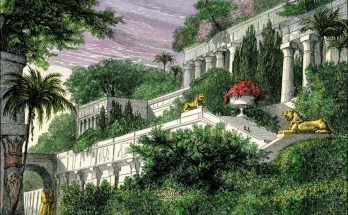
Babylon’s Hanging Gardens, One of the Seven Wonders of the Ancient World Giclee Print
16 in. x 12 in.
Buy at AllPosters.com
Framed   Mounted

The Seven Wonders of the World Of Antiquity:

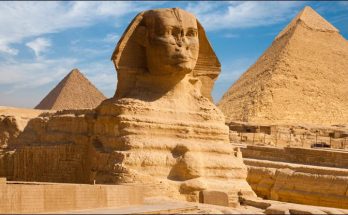
(1) The Pyramids of Egypt.
(2) The Gardens of Semiramis at Babylon.
(3) The statue of Zeus at Olympia, the work of Phidias.
(4) The Temple of Diana at Ephesus.
(5) The Mausoleum at Halicarnassus.
(6) The Colossus at Rhodes.
(7) The Pharos of Egypt, the Walls of Babylon or the Palace of Cyrus.

The Seven Wonders of the World Of the Middle Ages:

(1) The Coliseum of Rome.
(2) The Catacombs of Alexandria.
(3) The Great Wall of China.
(4) Stonehenge.
(5) The Leaning Tower of Pisa.
(6) The Porcelain Tower of Nankin.
(7) The Mosque of St. Sophia at Constantinople.

The palace of the Escurial has sometimes been called the eighth wonder, a name which has also been given to a number of works of great mechanical ingenuity, such as the dome of Chosroes in Madain, St. Peter’s of Rome, the Menai suspension bridge, the Eddystone lighthouse, the Suez Canal, the railway over Mont Cenis, the Atlantic cable, etc.

African Coffee Map

african coffee map African Coffee Map

African Coffee Art Print
14 in. x 18 in.
Buy at AllPosters.com
Framed

africa posters, cafe decoration, coffee posters, coffee art prints, vintage coffee posters, vintage african posters

Sunset on Pyramids I Art Print

sunset on pyramids1 art print Sunset on Pyramids I Art Print

Sunset on Pyramids I Art Print
Satie, Alain
27.5 in. x 19.625 in.
Buy at AllPosters.com
Framed   Mounted

Le Sud Algerien – South Algeria Art Print

le sud algerien art print Le Sud Algerien   South Algeria Art Print

Le Sud Algerien Art Print
Besse, S.
19.75 in. x 27.5 in.
Buy at AllPosters.com
Framed   Mounted

algeria posters, sahara posters, african travel posters, vintage travel posters, vintage african posters, africa posters

Morocco: Le Maroc Par Air Atlas Art Print

le maroc par air atlas Morocco: Le Maroc Par Air Atlas Art Print

Le Maroc Par Air Atlas Art Print
Hainaut
27.5 in. x 39.313 in.
Buy at AllPosters.com
Framed   Mounted