India to Australia with P&O
Eric Michaels
18 in. x 24 in.
Buy This Allposters.com
Asia
Poster of Japanese Great Wave Painting – Metropolitan Museum

The Great Wave at Kanagawa , c.1829
Buy This Allposters.com
Painting from the series of thirty-six views of Mount Fuji by Katsushika Hokusai – Asian modern art collections – World famous Japanese artists – Japanese woodblock prints – Edo Period in Japan art masterpieces
In its palatial building on Fifth Avenue at 82nd Street The Metropolitan Museum of Art displays famous collections of architecture, sculpture, paintings, prints, arms and armor, and decorative arts in 325,811 square feet of exhibition floor space. The paintings fill thirty-two galleries and represent the chief national schools of art; special attention is given to paintings by American artists. Well known among the many works shown are a diptych with “The Crucifixion” and “The Last Judgment,” “The Horse Fair,” and “Washington Crossing the Delaware.” The decorative arts include woodwork, metalwork, ceramics, enamels, glass and textiles. The Pierpont Morgan collection of European decorative arts occupies a wing by itself; another entire wing, the gift of Robert W. de Forest, is devoted to early American art. In the latter, The American Wing, is a popular collection, which emphasizes the domestic architecture and decorative arts of the United States from the 17th century to the first quarter of the 19th century. Other collections represent ancient art, comprising Egyptian, Greek and Roman, Assyrian, and other antiquities, and the art of the Middle Ages and the Near and the Far East. The Bishop collection of jade is the finest outside the Orient.
Black & White Nepal Katmandu Streets Photo Poster
Katmandu is a medieval city set 5.000 feet above sea level in the terraced foothills of the Himalayas, guarded by the white tops of Everest and Annapurna. Visit Hanuman Dhaka, the traditional seat of Royalty with its multi-roofed temples and palaces all intricately carved; the Temple of the Living Goddess with profusely carved wooden balconies and latticed windows; the temple of Kashta Mandap, said to be built from the timber of a single tree. Buddhist stupas like Swayambhu and Bouddha are massive and artistic.
Near to Katmandu is Nagarkot, a mountain resort with a sweeping view of the eastern region of the Himalayas, including Mount Everest. Patan, three miles south of Katmandu, is a city abounding in Buddhist monuments and Hindu temples.
Bhadgaon, nine miles east of Katmandu is the home of Napalese medieval art. It is a gold mine of stone sculptures, wood carvings, temples anld palaces. Danbar Square is full of pagodas and statues. The Golden Gate is a masterpiece in sculpture and embellishments. The Picture Gallery in Bhadgaon contains many valuable and beautiful works of Tantra art. Namche Bazar is the gateway to the Everest region; 180 miles from Katmandu, it gives you a panoramic view of Sagarmatha (Everest) Llotse, Nhuptse and Ama Dablam. This region is the home of the Sherpas. Pokhara Valley, a 45 minute flight from Katmandu is one of the most picturesque spots in Nepal. The beautiful lakes of the valley fed by glaciers of the Annapurna Range make this region ideal for trekking.
Tiger Tops is a ‘treetop’ hotel in the heart of 1.000 square mile wild life sanctuary has singles including tours and airport transfer.
Exotic Palm Trees & Beach in Thailand Poster Print

Tonsai Beach, Phi Phi Islands, Thailand
Buy This Allposters.com
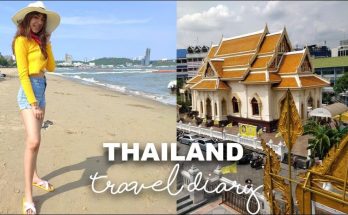
Say ‘Thailand’ and a lot of good things come to mind. Say its ancient name, ‘The Kingdom of Siam,’ and a host of romantic and exotic images come rushing. While the musical, The King and I and the other romantic tales of old Siam may not be an entirely accurate picture of today’s Thailand, it is not far wrong, for this country – the only one in Southeast Asia never to be colonized – is full of excment and color. The people are indeed beautiful, gentle and courteous. There are splendid temples, ancient cities, super religious artifacts, classical dancing, elephants, deep jungle, the best rice in the world and a capital that rivals Venice in waterly thoroughfares.
Language is Thai. Chinese and English are also spoken, but not to widely. Climate is hot and humid. The hottest months are March to May, the coolest November to February. The monsoon season lasts from June to October, but it does not rain continuously throughout the day. In Bangkok there is usually a heavy shower in the late afternoon. Best time to visit – November to April. Religion is Buddhism – about 93 % of the population.
Bali: Island of the Gods

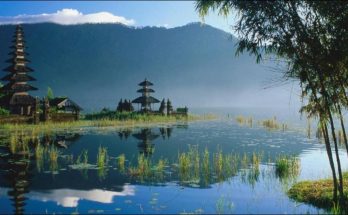
Ulun Danu Temple, Bali, Indonesia
Jecan, Gavriel
12 in. x 16 in.
Buy This Allposters.com
Find your center on an island so spiritual it’s become known as “Island of the Gods.” The warm, spiritual essence that writer Elizabeth Gilbert discovered here and celebrated in Eat, Pray, Love has been native to Bali for centuries. It’s one of 17,000 islands in the Indonesian archipelago—and the only one on which Hindus form the majority (93 percent). Even more striking is the fact that there is a spiritual celebration here nearly every day.
Three Hindu temples at the Besakih (the Mother Temple of Bali) survived a 1963 eruption that destroyed nearby villages while missing by mere yards this terraced complex atop volcanic Mount Agung. The event is still considered a miracle by locals, who arrive in regular procession; they balance offerings on their head and climb the steps to the sound of mantras, jingling bells, and the sharp flutter of umbul-umbuls (ceremonial Balinese flags).
Anyone interested in exploring the inner self might like the Nirarta Centre, an 11-room hotel set amid rice terraces and gardens that holds daily meditation sessions. After finding your center here, channel your energy into jungle treks, scuba diving, and big-break surfing along beaches of fine white and volcanic black sand. Exhale against a backdrop of rice paddies and Impressionist sunsets that illuminate the Indian Ocean.
Secret Beaches of Phuket, Thailand

Phuket Poster
36 in. x 24 in.
Buy at AllPosters.com
Framed Mounted
Phuket’s beaches are world-renowned and tourists flock from across the globe to visit the famous beaches at Patong, Karon, and Kata. So much so that many people complain these beaches have lost their charm. They say Phuket can no longer claim to be an idyllic tropical island getaway. The beaches are too crowded. Sun loungers line the entire length of the beaches, sometimes in rows three or four deep. Jet skis, banana boats and parasail boats plough through the water while vendors ply their wares up and down the beach. They say Phuket is finished as an island getaway destination and only caters to the party crowd.
These people have not spent enough time exploring Phuket. There are more than 40 beaches around Phuket Island and there is something to suit all tastes. If you want a beach with good holiday facilities but not too crowded then Nai Harn, Kamala, Surin, Bang Tao and Nai Yang all have good hotels and restaurants yet do not draw big crowds. If you really want to get away from the crowds then Nai Thon and Mai Khao beaches in the north of the island are usually very quiet.
Still all these beaches are well known in Phuket and firmly in the tourist travel guides. In this article, we will look at some beaches that still remain undiscovered to most tourists. We will not even include Laem Sing or Yanui in this list. They are both charming beaches but they have become well known and usually have plenty of visitors. Some of the following beaches are not even known to many of Phuket’s residents. These are Phuket’s secret beaches. (If you want more details about how to find these beaches see our Phuket Beach Guide.)
Banana Beach
This beautiful beach is in the northern half of Phuket between Bang Tao Beach and Nai Thon Beach. It is a lovely two-hundred meter strip of sand, studded with rocks in the middle and ringed with trees. It is a good swimming beach and there is some great snorkeling. There is no accommodation and just a single beach restaurant with a handful of sun loungers at the southern end.
There are usually only a handful of visitors at this beach. The majority of them arrive by longtail boat from other beaches but in fact, you can see the beach from the coast road above and there is a trail down.
Pansea Beach
Right at the northern end of Bang Tao Beach is beautiful and peaceful Pansea Beach. There are two up-market resorts here yet the location retains its refreshing tranquility. Just offshore is Kala Island (or Kata Island depending who you believe) which shelters the shallow bay from waves so it is always calm. The waters are too shallow for swimming and when the tide is out you can walk to the island. It is a great beach for paddling and ideal for children to play. There are no refreshments here so it is a good idea to bring a picnic.
Pon Beach
This secluded little beach is in the headland north of Patong. The locals know it as Nai Yair Beach. It is amazing how few people find this beach considering it is located so close to the hordes at Patong. There is nothing here but a couple of rural shacks and a few grazing cows. It is a sandy beach but not good for swimming due to the rocky seabed. There is some good snorkeling.
There are usually a couple of locals renting sun loungers and selling refreshments. They can also provide you with a small barbecue to cook your own. There may be a small charge for crossing the private land to reach the beach.
Paradise Beach
In the headland south of Patong, there are two beautiful beaches that remain relatively unspoiled. They are not as undiscovered as the other beaches we mention on this list but still a break from the heaving masses at Patong. The first is Paradise Beach. Right at the tip of the headland, you can reach it by road (track) or boat.
It is a beautiful beach with overhanging trees. There is no accommodation but there is a restaurant and there are plenty of sun loungers. The beach is not the best for bathing due to the rocky seabed close to shore but there is some excellent snorkeling. There are usually plenty of people around but still it is surprising how many people in Patong do not know this beach is here.
Freedom Beach
You can only reach this stunning beach by boat. It is in the headland south of Patong all the way around and back towards the Karon Beach side. Still it is well worth the boat ride with fantastic bathing and snorkeling.
There are a couple of restaurants and plenty of sun loungers under the trees. The locals take great care of the beach and it is always pristine. Plenty of people do make this a day trip from Patong but the beach is never crowded and again it is surprising how many people in Patong do not know this beach is here.
Nui Beach
This beach is most known for how difficult it is to reach by land. Located between Kata and Nai Harn, the only way to reach it by land is down a two-kilometer dirt track that is almost impossible to traverse in a car. You can just about do it on a motorbike but it is better to walk or let one of the locals take you down on their ATV for a small fee.
It is also known as the most expensive beach in Phuket because you have to cross private land to reach it and they charge 250 baht for the privilege. This fee does get you a sun lounger and drink. When you do arrive, it is a beautiful secluded spot with good swimming and snorkeling. There is a rustic restaurant overlooking the beach but no accommodation. It is never crowded.
Ao Sane Beach
This beach is in the headland at the north end of Nai Harn Beach. You need to go through Le Meridian Phuket Yacht Club’s car park to reach it but they do not stop you. There is a restaurant here and some budget bungalows by the beach. There are usually a few people around but it is never busy.
It is actually a series of three small beaches split by little rocky headlands. None of them is good for swimming due to rocks and corals close to shore. There is some excellent snorkeling.
Laemka Beach
This little beach is at the southern end of Phuket between Rawai and Friendship Beach. It is not signposted and a little difficult to find but a beautiful spot. The Evason Resort and a small bungalow resort are nearby but still the beach remains quiet. It is one of the few southern beaches where you can have a swim and there are nice views out to the southern islands.
Ao Yon Beach
Nestled deep into Cape Panwa is Ao Yon Beach. This is the best beach on the southern side of Phuket. Although it is well developed with residential property, there are no hotels or restaurants by this beach. It is home to Phuket Yacht Club and there are always plenty of boats moored in the bay.
It is a beautiful stretch of sand and a good bathing beach. It is usually very quiet and a real getaway.
Japan: From Kyoto to Tokyo, Mount Fuji, Kyushu Island, Korea

Chuo-Dori Avenue, Ginza, Tokyo, Japan Photographic Print
Bibikow, Walter
12 in. x 16 in.
Buy at AllPosters.com
Framed Mounted
From Kyoto
Thanks to its perch in the relatively high latitudes, northeast Asia is the only part of the region that enjoys four distinct seasons-a climatic oddity that makes it curiously familiar for Westerners traveling in Japan, Korea, and parts of northern China. Cherry-blossom time is perhaps the best season to visit Japan (though beware of the crowds), and fall the best for Korea (where the colors easily rival those of New England). In China’s north and Russia’s far east, high summer or midwinter are best-warm sunlit evenings in July or magnificent snowy vistas in December.
Forget Tokyo as a base: Its monstrous international airport, Narita, happens to be so inconveniently sited-at the very least, two and a half hours from the average Tokyo hotel room-that it is actually the very last place to choose. By contrast, Osaka’s handsome new airport proves a very good jumping-off point and is well connected to its neighbor cities, and not least to the exquisite old Japanese capital of Kyoto-which means that you can spend a meditative morning communing with the stones in Ryoan-ji Temple or strolling the Philosopher’s Walk from Eikan-do to Ginkaku-ji before setting out, via what is called the new Kansai airport, on your adventure.
There ate–two further practical advantages to Osaka. First, flights from the Kansai field to Tokyo land not at the far away Narita but at the much handier Haneda Airport, only minutes from Tokyo’s city center; and second, Osaka-where there is a brand-new Imperial Hotel that is well worth seeing-is nearer to the major centers of South Korea, essential destinations for anyone wanting to have the full picture of what northeast Asia is all about.
To Tokyo
This, of course, has to be the prime destination, but it is invidious to offer specific sites of pilgrimage-the Imperial Palace, the Ginza, the 5 A.M. auctions at the Tsukiji fish market. Better to suggest things to do, such as Kabuki theater (marathan sessions are held at the Kabuki-za Theater in Ginza), or No drama (at the nearby Ginza No-Gakudo), or simply the amazing nightlife in such areas as Shinjuku or Roppongi. Whereas in smaller Japanese cities and towns it’s a good idea to have the (incredibly expensive) experience of staying in a local inn, a ryokan, in Tokyo you are better advised to stay at a Western-style hotel, of which the Seiyo Ginza and the Imperial remain among the best.
To Mount Fuji
Mount Fuji and the nearby hot spring region of Hakone are well within the two-hour range for train journeys from Kyoto. You climb the mountain (in Japan they say the wise man climbs it but only the fool climbs it twice), taking about four hours up, two down; warm clothing is essential if you climb at night-as you should, in order to witness goraiko, the sunrise, from the summit.In Hakone, where you can stay at astonishingly costly hotels like the Fujiya, one ofthe oldest Western-style hotels in the country, the attractions are legion-lakes, mountains, mud baths, ancient forests, and, if you’re lucky, morning views of Fuji-san looming over all.
To Kyushu Island
Here is where you come to know Japan best of all, however, by experiencing her traditions and her curiosities rather than by seeing her cities and her sights. But doing this demands same valor on the part of the casual visitor-nowhere more so than in the sampling of the onsen, the open-air bath. Try Beppu, where you can either bathe in a variety of types and temperatures of water or be buried up to the neck in hat sand on a volcanic beach. In Yufu-in, inland and near-by, the scene is more genteel and more beautifully and classically Japanese, and there are plenty of smaIl hotels with adjoining baths.
Also on Kyushu is the reborn town of Nagasaki-famous for its role as the first open city in pre-Meiji Japan and as the second city to be devastated by the American nuclear attacks in 1945. Hiroshima, two hours by train southwest of Osaka and still on the main island of Honshu, is equally well worth visiting.The two other main islands of Japan-the small and temple-filled Shikoku and the large and largely agricultural Hokkaido-are less frequently visited. For those with time (six weeks if on foot, a day if by bus), there is a memorable pilgrimage route that takes in all 88 temple site s on Shikoku; and for those with wintertime energy, the skiing around Sapporo is excellent. The Shikotsuko Hokkai Hotel here offers one of the few affordable Japanese ryokan experiences in the country.
To Korea
From Osaka Airport, it is quick and easy to reach Seoul, Pusan, and, with a little more effort, the North Korean capital of Pyongyang. While the sight of the Cold War, still very much alive and well at the armistice village of Panmunjom, may enthrall some, the little-known countryside of South Korea remains spectacularly beautiful: The unforgettable temple of Haein-sa near the city of Taegu is among the most notable places.Within locked rooms and guarded by monks lies one of the original Buddhist woodenblock libraries, the Tripitaka Koreana, carved in the thirteenth century; and the temple itself sits in a dreamlike panorama of misty mountains of unparalleled beauty-the perfect spiritual link to the fragile loveliness of the Kyoto temples.
A Trip to Great Wall of China

Great Wall of China at Jinshanling, China Photographic Print
Jones, Adam
24 in. x 18 in.
Buy at AllPosters.com
Framed Mounted
The Great Wall of China as some believed originated as a military fortification against intrusion by tribes on the borders during the earlier Zhou Dynasty. In 770-BC-476BC, the ducal states extended the defense work, and built large structures to prevent the attacks from other states. The Great Wall of China was eventually separated during the Qin Dynasty, which preceded the Zhou Dynasty. The Zhao, Qin, and Yan kingdoms were connected to form a defensive system on the northern border of the country of Emperor, Qin Shi Huang. In 214 BC the building of the Great Wall of China was on its way. The Great Wall of China took as long as ten years to build.
The Great Wall of China took hundreds of thousands of laborers working daily beyond human limitations to construct and build. Many persons that did not work were thrown into the foundation trenches starving from hunger and exposure of the earths changing weathers. The Great Wall of China was then called The Longest Cemetery on Earth. Buried beneath its structure were more than 400,000 persons.
The Great Wall was stretched from Linzhao (eastern part of Gansu Province), in the west to Liaodong (Jilin Province) in the east. The Great Wall of China served as both a defense and symbolized the power of the emperor. The Great Wall of China was partly successful in repelling invading Mongol forces more than a century ago.
The Great Wall of China has more than 300 million trees, and its purpose was to serve as a barrier from the dust storms that swept into China from the Gobi Desert and other low-rainfall areas. The Great Wall of China was dubbed This Great Green Wall. During the 50’s, the city of Beijing was beset by 10 to 20 dust storms every spring. Visibility was only half a mile for 30 to 90 hours each month. By the 1970’s the storms had reduced resulting in greater visibility at less than ten hours per month. The reduction made work easier for the many laborers.
The Great Wall of China towered China’s mountains, plunging to the lower valleys, and marching across burning desert plains. Very cold winds coupled with snowstorms, made it very difficult for workers. At the same time raging desert sun and stinging sandstorms oppressed the workers, making their jobs difficult, and often risky.