Asia

Balinese Dancer in Front of Temple in Ubud

Balinese Dancer in Front of Temple in Ubud, Bali, Indonesia

Balinese Dancer in Front of Temple in Ubud, Bali, Indonesia Photographic Print
Zuckerman, Jim
12 in. x 9 in.
Buy at AllPosters.com
Framed   Mounted

bali, balinese dances, balinese dancers, bali culture, bali posters, tropical regions, travel posters, indonesia posters

Ulun Danu Temple in Bali

Ulun Danu Temple, Bali, Indonesia

Ulun Danu Temple, Bali, Indonesia Photographic Print
Jecan, Gavriel
12 in. x 16 in.
Buy at AllPosters.com
Framed   Mounted

Ulun Danu Temple in Bali

Ulun Danu Temple is a Balinese Hindu Temple located at Candi Kuning countryside, Baturiti sub district and Tabanan regency. The distance from Denpasar town is about 50 km north side the way from Denpasar to Singaraja. It is set at lakeside of Beratan with beautiful lake view and hills surround it. It is situated in the plateau area with cool atmosphere surround it and hills as a backdrop. We can find at north side of this temple is Pucak Sangkur mount, in the eastside there is Beratan Mount which also referred as Pucak Mangu or Pucak Pangelengan, in the south side there is Terate Bang Mount and in the Westside there is Tapak Mount and Watukaru Mount.

See Bali Giclee Print

See Bali

See Bali Giclee Print
Korver, John
18 in. x 24 in.
Buy at AllPosters.com
Framed   Mounted

bali posters, vintage bali posters, travel destinations, bali, exotic posters, indonesia posters, tropical regions, vintage travel ads

Bali: Path to Happiness

Bali Cove

Bali Cove Art Print
Fronckowiak, Art
40 in. x 20 in.
Buy at AllPosters.com
Framed   Mounted

Everyone in Bali smiles. Big, broad, beaming smiles. And all that’s necessary to evoke it is eye contact. Even when they may be preoccupied with weaving their scooters through traffic or carrying a heavy, flailing pig across the road, you only have to hint at a smile from your own lips and the response is immediate and electrifying.

“Transport?” queried a smiling young man on a sidewalk in Ubud, an artsy town in the south-eastern hills. It’s a frequent offer on the streets of nearly every town in Bali. Everyone with a car will offer you a ride for a small price. You may say “no thank you” seven times on Monkey Forest Road in Ubud. But what’s heart-warming is that you will always receive an enthusiastic “Welcome!” in response.

As one of Indonesia’s luxury destinations, Bali is a truly service-oriented society and economy. Away from the resorts on the coast, there is less commercial zeal and more genuine friendliness. Culturally, Bali differs from other Indonesian islands, and indeed is an exception in this predominantly Muslim country with its Hindu-Buddhist history. It is this history that shapes the Balinese approach to life and the Balinese landscape.

Exploring the surroundings of Ubud on bike is perhaps the best way to take in the beautiful landscape, with all its rice terraces, temples, villages and cackling roosters. I signed up for a daytrip with Arung from Bali Moon Group. We began with a morning stop at an eclectic orchard growing everything from mangosteen, papaya and peanuts to cacao, coffee beans and tea leaves. Arung also introduced us to salak, a fruit with a brown, snake-scaled skin that looks like a nut inside and tastes like mixture of apple and pear.

After an invigorating ginger tea we were driven up to the edge of Mount Batur. The mountain bikes were unloaded and we were ready to start off downhill back towards Ubud. Arung had assured us back in the office that it was “all downhill”, but some of us were taken aback by how steep downhill can be. And the road was just a rocky path. One of the English girls on the excursion already wanted to make use of the trailing van service that carried our backpacks, but was persuaded to stick with it since it would get easier.

Our reward, when it began to level out, was a school full of excited children running towards the road to greet us. Six and seven year old boys were exploding with excitement, seemingly overwhelmed by such an unexpected visit from strangers. “Hallo! Hallo!” they squealed, vying to make eye contact with any one of the cyclists and jumping for high-fives. Wide-eyed awe and giggles rippled through the crowd as our group responded to their eagerness. It felt like the Tour de France. A few boys ran with the bikes until they were out-paced or came to the end of the village.

We cycled along rice paddies, many of them flocked by ducks feeding on leftover grains. In the rolling countryside I could hear the lovely sound of bamboo music and wind chimes everywhere. We passed through several more villages, all laid out on a sloping north-south axis and flanked by walled enclosures that are the typical Balinese. Each had an elaborately carved gateway and immediately behind it a wall, the aling-aling, to keep floating evil spirits from sweeping in through the open gateway.

In one village an old man on a moped scooted up beside me to ride tandem and indulge in conversation. His smile was wide, his questions direct. “Where you from? Where you stay? Where you go?” He exudes a pride in managing dialogue with a foreigner and brushes off the cajoling of youngsters. As we neared the open countryside he veered off back into his village and signalled his final sentence with a wave,”The Balinese people welcome you. Good time.”

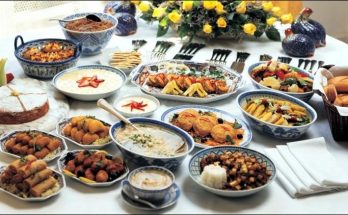
Everyone, just everyone, genuinely wants to have contact and wish you well. When we came to the end of our cycle we were invited into a family home. The residential compound had sleeping pavilions for extended family members, a fountain in the middle, a temple and a low table for us to share dinner. A typical Indonesian meal is a selection of hot and cold plates, with spicy meats, peanut sauces and sautéed vegetables. Everyone was exhausted from the combination of heat and pedalling, and completely ready to feast on the buffet.

Japan: Daigo Shrine, Kyoto Art Print

Daigo Shrine, Kyoto, Japan

Daigo Shrine, Kyoto, Japan Art Print
Fukushima, Umon
30 in. x 14.25 in.
Buy at AllPosters.com
Framed   Mounted

japan posters, kyoto posters, daigo shrine posters, travel posters, asia posters, asian cultures

India in Nutshell

India in Nutshell

“If there is one place on the face of earth where all the dreams of living men have found a home from the very earliest days when man began the dream of existence, it is India!” – French scholar Romaine Rolland

India in Nutshell

The history of India dates back 5000 years, back to when India’s first major civilisation flourished along the Indus River valley. The Indus civilization at one point of time extended nearly a million square kilometres across the Indus river valley and existed at the same period as the ancient civilizations of Egypt and Sumer but far outlasted them. Aryans came around 1500 BC and were mainly responsible for collapse of Indus Valley civilisation. The Four Vedas or the important books of Hinduism/India were compiled in this period.

The modern India got its independence from Britain in 1947 after a long struggle led mostly by Mahatma Gandhi. However,in the process of becoming independent, the country was divided into two countries. Post independence, India has made huge progress inspite of great problems, and has developed its industry and its agriculture, and has maintained a system of government which makes it the largest democracy in the world.

Weather

India experiences at least three seasons a year, Summer, Wet (or “Monsoon”) and Winter, each of which can vary in duration from north to south.
The heat starts to build up on India’s northern plains from around February, and gradually summer hots up by April or May and is at its peak in June. In central India temperatures of 45°C and above are commonplace. Even South India also becomes uncomfortable during summer season.

Places to See

Agra
Darjeeling
Delhi
Goa
Jaipur
Kolkata
Mumbai

Festivals & Events

Indian celebrate a huge number of festivals, most of them highly spectular and filled with colours. Therfore, it is a huge task to list all of them. However, given below is the list of some prominent festivals & events of India.

Republic Day – is celebrated on 26th January, every year. This is the day when India adopted the constitution and became a republic.
Holi – the festival of colour is celebrated some time during the month of February/March It marks the beginning of spring and is one of the most colourful Hindu festivals in the north of India. People throw coloured water and powder to each other.

Kumbh Mela – this huge festival commemorates an ancient battle between suras (gods) and asuras (demons) for a pitcher (kumbh) containing the nectar of immortality. During the fight for possession, four drops of nectar fell from the pitcher and landed in Allahabad, Haridwar, Nasik and Ujjain. The mela is held every three years rotating through these four cities.

Rath Yatra – the procession in Puri, every year in June/July involves the temple car of Lord Jagannath making its annual journey, pulled by thousands of eager devotees.

Dussehra & Durga Puja – September/October is the time to witness the Dussehra and Durga Puja Festivals, which are celebrated almost all over in India, but is perhaps at its most spectacular in West Bengal, Kullu, Mysore, and Ahmedabad.

Diwali – the festival of lights is the happiest festival of the Hindu calendar and is celebrated over five days in October/November. Sweets, oil lamps and firecrackers all play a major part in this celebration in honour of a number of gods. Fall some time in October / November every year.

When to Go

The best time to visit India is during October to first week of March. This is the period when climate is relatively cooler as compared to other part of the year.

Delhi: The city of civilizations and dynasties

Taj Mahal in India

Taj Mahal in India Photographic Print
16 in. x 12 in.
Buy at AllPosters.com
Framed   Mounted

Located on the banks of the sprawling river Yamuna, Delhi, the capital of India, is a fascinating blend of a myriad of ancient and modern civilizations, reflected not only in its diverse cultural heritage and historical monuments, but also in the current social structure and lifestyles. The city tells the history of different civilizations and dynasties that flourished here for over 3000 years. Their legacy survives in the many ancient monuments left by their leaders, each a chronicle of the glory of his era and a reflection of the dominant culture. The remains of seven distinctive capital cities can be seen here.

Here is a selection of the top five tourist attractions in Delhi:

Qutub Minar

A minaret of mammoth (238 feet) built from the remains of 27 Hindu and Jain temples during the 1193-1369 year, commemorating the victory of Qutab-ud-din over last Hindu kingdom in the city, the Qutub Minar is one of the oldest monuments of Delhi. Decorated with calligraphy representing verses from the Koran, it narrows from a diameter of 50 feet at the base just 8 feet high. The first three floors are constructed of red sandstone and white marble two superiors.

In the same complex there is a mysterious Iron Pillar, bearing fourth-century Sanskrit inscriptions of the time of King Chandragupta II, who has intrigued scientists at the highest point because it has withstood centuries of climatic changes and remained rust-free until now. A popular legend says that if you can surround it with your arms while standing with his back to touch any wish will be fulfilled.

Red Fort

Popularly known as Lal Quila and built by Shah Jahan during the years1618-1647, Red Fort, with its massive sandstone walls and exquisite architecture, is the ultimate reminder of the richness, beauty and sheer power of the Mughal empire. There are many must-see places in the fort, resplendent decorative complex, with separate bedrooms and a balcony for women, swimming pools, and natural air conditioning. It also houses an archaeological museum.

Jantar Mantar

Built in 1724 by Maharaja Sawai Jai Singh II, the esoteric, impressive structure of salmon-colored stone and brick is an observatory used by the king to measure time and calculate the positions of stars and planets, and the prediction of eclipses. It houses several buildings with a unique combination of architecture geometric shapes, each for a specialized use of astronomical measurement.

Purana Qila (Old Fort)

Was built on the ruins of the old home town of Delhi (Indraprastha, founded in the 3rd or 4th century BC), the Afghan ruler Sher Shah during the years 1538-1545, the old fort with its walls massive and three imposing gateways gives a fair idea of its lost glory. It houses a small octagonal red sandstone tower, used by King Humayun as a library, mosque Qila-i-Kuhran, and a small archaeological museum.

India Gate

Built in sandstone, India Gate is a memorial to commemorate the sacrifice of Indian soldiers during the First World War The grandeur of the architecture of the house near the Rashtrapati Bhawan and Parliament not to be missed, whatsoever.

So start planning your trip!

Yoshino: The home of cherry blossoms

Yoshino: The home of cherry blossoms

Yoshino and Kumano, a little apart from each other, the one mountainous and the other coastal, were always treated as two entireties. They have now been welded into one park, covering an area of 168,560 acres. Both are no less celebrated in history and legendary traditions than for their beauty, their temples and shrines — perennial Meccas for devotional and holiday-making pilgrims. Astride the three prefectures of Nara, Wakayama and Mie in central Japan, on the Pacific coast, they are veritable centers for picnics, excursions and holidays in the Kwansai district, as Nikkō and Hakone are to the Kwantō people.

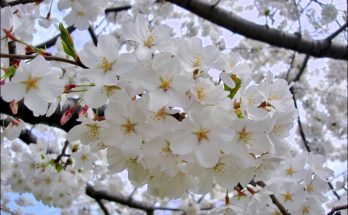
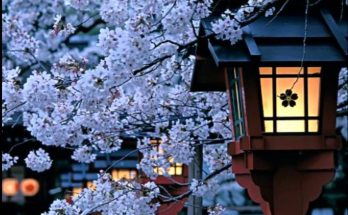
Every Japanese knows Yoshino as the home of cherry blossoms, for most of the cherry trees blossoming in spring throughout Japan bearing the name “Yoshino-zakura,” were originally transplanted from Yoshino. Little wonder if Kwansai folk should tell you never to talk about Japan’s cherry blossoms till you have seen Yoshino. It was amid the cherry-clad hills of Yoshino that the ill-fated Emperor Godaigo (1318-1339) held his court for three years. Yoshino was the august abode of the Emperors of the Southern Court for half a century, and is naturally associated with many romances, heroic and tragic, which have been an undying source of inspiration to poets, writers and artists.

Yoshino’s cherry blossoms make a splendid contrast with those of most other places in that they grow on the side of mountains. As you go up the winding hillpaths, the blossoms present sights of surpassing beauty, growing as they do, among the green trees and rocky mountain scenery. The most famous spot is “Hitome-senbon” (” A Thousand Trees at a Glance”), and further up the mountain there are “Naka-no-senbon” (” A Thousand Trees in the Middle”), regions adorned with cherry trees so numerous as to give rise to the conventional names.

Yoshino, however, is in reality a collective name for the three ranges of mountains, namely, Sanjogatake or Omine (5,620 ft.), Shaka (5,904 ft.), and Bukky (6,281 ft.), each consisting of several peaks sometimes called the “Yamato Alps.” The firstmentioned, O + ̦mine, is the sacred mountain, claiming the somewhat out-of-date distinction of being the only mountain in Japan to forbid women to enter its precincts. Omine means “great peak,” suggesting its serrated ridges.

It makes a striking contrast with Mount Odaigahara, to the east of Ōmine, whose summit is a tableland of 6 square miles, affording a wonderfully extensive view, including, on a clear day, even Mount Fuji, 180 miles to the east. And these mountains are climbed by the more arduous of excursionists not only in cherry-time but in all other seasons. The great majority are content to go as high up as the blossoms tempt them. The best way to reach Yoshino is to go by the Osaka Electric Railway, which runs several special services during the cherry season in early April.

Japan Modernization

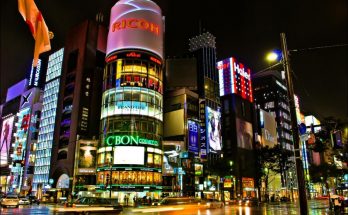
Night View of Tokyo Tower

Night View of Tokyo Tower Photographic Print
16 in. x 12 in.
Buy at AllPosters.com
Framed   Mounted

The Tokugawa clan still ruled Japan in the 1850′s when Admiral Peary sailed into Tokyo Bay and called upon the Japanese to end their two and a half centuries of hermitage. Repeated overtures to this end had been declined earlier, and Japanese administration had been extended to Hokkaido early in the nineteenth century to prevent Russian encroachment. The American overture was more than a casual invitation, however, for it was made through a show of military force which was not lost upon the Tokugawa.

Though they still held firm control internally they were quick to realize that Japan could not stand up to outside forces that could muster many large guns in the big steam naval vessels such as those in the American fleet. Within a few years they had signed trade treaties with several occidental countries, and had taken the first steps to modernize their own military establishment. This was the fourth time that a small group had changed the whole course of Japanese history.

The changes could not be undone, but they were the undoing of the Tokugawa and of the old order of feudalism in Japan. The emperor and the other clans that ruled Japan under Tokugawa control had not had the foreign fleet in their own home ports and were inclined to expel the foreigners. A few “incidents” soon convinced other leading clans of the futility of resistance to the outside world. The Satsuma clan of western Japan turned to developing a modern navy, and the Choshu clan began the building of a modern army.

General opposition to the long rule of the Tokugawa took the form of restoring the emperor to a kind of power than the imperial family had not exercised for centuries, swept the Tokugawa from internal control, and started Japan on a course of modernization that both startled and impressed the whole world in the 75 years between 1866 and 1941. The Tokugawa had committed Japan to this program without the original support of the country, but other clans took over the lead, carried on the program, and managed to retain control of Japan until the end of World War II. Japan entered upon this new era in sound economic, social, and political circumstances, for there had been no time for a long series of disastrous internal wars to dissipate either population or resources.

A first step in modernization was the abolition of landed feudalism and the outmoded administration of government. Direct rule by the emperor and a bureaucracy, the abolition of feudal fiefs (for a reasonable price in government bonds), the establishment of new political administrative regions, and the pensioning off of the old regional rulers and the parasitic soldier group were the first steps in internal organization. This process, of course, gave to the ruling classes privileged opportunities for those members discerning enough to take them. Some old clans rose to new political power, and others acquired new economic strength, but it is notable that in general the control of Japan continued in the hands of the same general groups that had run Japan for many centuries.

Though the Tokugawa had actually sent a few observers abroad before the opening of the country, Japanese culture was sadly out of date compared to the industrial, military culture of the West. Realizing this the new leaders of Japan fell back upon a useful precedent, that of sending students abroad to study the superior cultures. Since many of these new leaders were derived from the old military clans and the professional soldiery, their first concern was the building of a strong military force which could deter the colonial imperialism of the Occident. Appreciating also that such a force could now be built only upon the basis of an industrial technology, they undertook a thoroughgoing industrialization.

So for nearly 50 years the Japanese government sent commissions, study groups, observers, and students all over the world to study the material economy of the West in a determined effort to bring Japan up to date as quickly as possible. German military and medical science, French and German law, British ship building, and the railroad and manufacturing techniques, and the business methods of the United States were all carefully studied. Observers all over the world studied the patterns of trade, colonial imperialism, the developments of agriculture, mining, transportation, and architecture. Educational systems and political institutions were examined.

The Japanese government took the lead in these matters, paying for the studies and then subsidizing the developments in Japan. The first railway was built between Tokyo and Yokohama in 1872, and by the end of the century hundreds of power plants and factories were operating. The operation of concerns was turned over to private companies formed by the leading clans, so that not only did Japan industrialize rapidly, but also the control of the modern aspects of the economy remained in the hands of the old leading elements. It is a commonplace to say that in a non-industrial country the evolution of manufacturing begins slowly and somewhat on a hit-and-miss basis. Not so in Japan, for by 1900 most of the kinds of things being done abroad were also being done in Japan. As new industrial developments occurred abroad Japanese continued to study them and to adapt them at home.

In the first few decades of modernization industrial skills were not sufficient to keep pace with developments of the economy, operating efficiency was rather low, and the occidental rather easily came to the conclusion that the Japanese were not creative but only imitative. It should be sufficient to remind an American, however, that as late as the end of World War II the United States was still following the lead of Germany in many matters of industrial evolution to put the question of copying in proper balance. The amazing thing is that Japan went at modernization in a wholesale manner, in the way in which she had studied Chinese culture centuries earlier, and in a way seldom attempted by any other society. This was long-range planning well before five-year plans became the vogue.

Japan Art Print

Japan

Japan Art Print
Ignacio
11.813 in. x 15.75 in.
Buy at AllPosters.com
Framed   Mounted