Australia and Oceania

Vintage Airline Ads: Fiji Fly by Teal Masterprint

Fiji - Fly By Teal

Fiji – Fly By Teal Masterprint
11 in. x 17 in.
Buy at AllPosters.com
Mounted

fiji posters, vintage fiji posters, travel posters, tropical regions, travel destinations, vintage airline ads, retro airline ads, airline posters, french travel posters, tropical regions

Vintage Travel: Tahiti 1935, Giclee Print

Tahiti, 1935

Tahiti, 1935 Giclee Print
18 in. x 24 in.
Buy at AllPosters.com
Framed   Mounted

tahiti posters, vintage tahiti posters, travel posters, vintage french travel ads, exotic posters, tropical posters, travel destinations, tahiti travel posters, tahiti 1935 poster

Tahiti: Wahine Hula Dance Giclee Print

Tahiti Wahine Hula Dance

Tahiti Wahine Hula Dance Giclee Print
18 in. x 24 in.
Buy at AllPosters.com
Framed   Mounted

tahiti posters, vintage tahiti posters, wahine hula dance posters, tropical regions, vintage travel ads, exotic posters, travel destinations, giclee prints, cafe decoration

New Zealand: Land of The Lord of the Rings

Rainforest Fox Glacier, New Zealand

Rainforest Fox Glacier, New Zealand Photographic Print
Barnett, Ross
24 in. x 18 in.
Buy at AllPosters.com
Framed   Mounted

New Zealand is a country in the Southern Hemisphere in the Oceania region, which is called Aotearoa in Māori, which translates as the Land of the Long White Cloud, It is a country of rare seismic beauty enriched with glacial mountains, fast-flowing rivers, deep, clear lakes, hissing geysers and boiling mud. New Zealand is notable for its geographic isolation, being separated from Australia to the northwest by the Tasman Sea, some 2,000 kilometres (1,250 miles) across. Its closest neighbours to the north are New Caledonia, Fiji and Tonga.

The capital city of New Zealand is Wellington. It has got its independence on 26 September 1907 from UK. The Maori, from eastern Polynesia, first settled New Zealand sometime after 800AD. Abel Tasman, a Dutch mariner, discovered New Zealand for Europeans in 1642. He was followed by Captain James Cook of the British Navy in 1769, and later by seal-traders, loggers, whalers and Christian missionaries.

The government type is parliamentary democracy where Elizabeth II is the Queen of New Zealand and is represented by a non-partisan Governor-General; the Queen ‘reigns but does not rule’, so she has no real political influence. Political power is held by the Prime Minister, who is leader of the Government. The Realm of New Zealand also includes the Cook Islands and Niue, which are entirely self-governing, Tokelau, and the Ross Dependency (New Zealand’s territorial claim in Antarctica).

For the administration of environmental and transport matters New Zealand has 12 regional councils and 74 territorial authorities to administer roading, sewerage, building consents, and other local matters. The territorial authorities are 16 city councils, 57 district councils, and the Chatham Islands County Council.

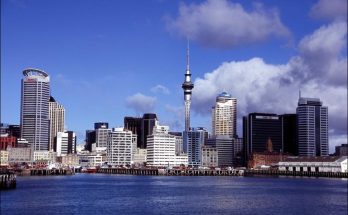
Skyline of Auckland, North Island, New Zealand

Skyline of Auckland, North Island, New Zealand Photographic Print
Pearson, Doug
12 in. x 9 in.
Buy at AllPosters.com
Framed   Mounted

New Zealand has a population of about 4.1 million. About 70% of the population are of European descent. New Zealand-born Europeans are collectively known as Pākeha – this term is used variously and some Māori use it to refer to all non-Māori New Zealanders.

Christianity is the predominant religion in New Zealand, although nearly 40% of the population has no religious affiliation. The main Christian denominations are Anglicanism, Roman Catholicism, Presbyterianism and Methodism. According to census figures there are Anglican 24%, Presbyterian 18%, Roman Catholic 15%, Methodist 5%, Baptist 2%, other Protestant 3%, unspecified or none 33% of the overall population.

New Zealand comprises two main islands, the North and South Islands, and a number of smaller islands. The total land area of New Zealand is 268,680 square kilometres (103,738 sq mi) which is a little less than that of Italy and Japan, and a little more than the United Kingdom. The country has approximatly 15,134 km of coastline. The most significant of the smaller inhabited islands of New Zealand include Stewart Island/Rakiura; Waiheke Island, in Auckland’s Hauraki Gulf; Great Barrier Island, east of the Hauraki Gulf; and the Chatham Islands, named Rekohu by Moriori.

The South Island is the largest land mass in New Zealand, and is divided along its length by the Southern Alps, the highest peak of which is Aoraki(Mount Cook), 3,754 metres (12,316 ft). There are 18 peaks of more than 3,000 metres (9,800 ft) in the South Island. The North Island is less mountainous than the South, but is marked by volcanism. The tallest North Island mountain, Mount Ruapehu (2,797 m / 9,176 ft), is an active cone volcano. The dramatic and varied landscape of New Zealand has made it a popular location for the production of television programmes and films, including the Lord of the Rings trilogy.

The country has extensive marine resources, with the fifth-largest Exclusive Economic Zone in the world, covering over four million square kilometres (1.5 million sq mi), more than 15 times its land area. There are also abundant native forests, long, deserted beaches and a variety of fauna, such as the kiwi, endemic to its shores.

The climate throughout the country is mild, with temperatures rarely falling below 0°C (32°F) or rising above 30°C (86°F). On the West Coast of the South Island to dry and continental in the Mackenzie Basin of inland Canterbury and subtropical in Northland conditions vary from wet and cold. Christchurch is the driest is the driest of the main cities, receiving only some 640 mm (25 in) of rain per year. Auckland, the wettest, receives a little less than three times that amount.

Until the arrival of humans, other than three species of bat(one now extinct) there were no non-marine mammals. New Zealand’s forests were inhabited by a diverse range of birds including the flightless moa (now extinct), and the kiwi, kakapo, and takahē, all endangered due to human actions. Unique birds capable of flight include the Haast’s eagle, which was the world’s largest bird of prey (now extinct), and the large kākā and kea parrots. Reptiles present in New Zealand include skinks, geckos and tuatara. There are four endemic species of New Zealand primitive frogs. There are no snakes but there are many species of insects, including the weta, one species of which may grow as large as a house mouse and is the heaviest insect in the world.

Planning To Travel To New Zealand?

Queenstown, Lake Whakatipu, New Zealand

Queenstown, Lake Whakatipu, New Zealand Photographic Print
Pearson, Doug
12 in. x 9 in.
Buy at AllPosters.com
Framed   Mounted

Beauty of Nature found in New Zealand. Many of us have always dreamed of planning a visit down under. Traveling through countries like New Zealand can be an eye opening and interesting experience for everyone. It is something that requires a lot of planning and a lot of thought, so you should be sure that you are up to the task of the planning before you begin.

Try to imagine outside areas that are completely different from anything that you have ever seen before. This is what is awaiting you in New Zealand. The best thing that you can do while planning a trip to this country is to get ready to be outdoors.

One of the things that you can discover while in New Zealand is the Maori culture. This is a big part of life in New Zealand. The culture came from migrations by Polynesians about 700 years ago. This is 200 years before the European history even really begins. Most of the names of the places, the arts, and the architectures in New Zealand come from this culture, and reflect how they have shaped a society around it.

There are many places in New Zealand where you can learn about the historical significances that happened. In Waitangi, there is much to learn about a treaty that happened to change all of the courses of history for New Zealand forever. There is also much to learn about the gold rush in Otago, because this city still displays many of the relics of the country-wide gold rush that changed the face of New Zealand. Also, in Napier, there is much to learn about the Art Deco architecture, which only came about because of the city’s almost total destruction by an earthquake in 1931.

One of the greatest things about traveling in New Zealand is simply hearing the stories that are told in every city and town. You should be confidant to ask questions of anyone you see, regarding the sties to see, the different buildings or monuments, or the statutes. The people of New Zealand are extremely friendly and love to spend time talking to other people who have come to visit their country. They love to teach others about their land, and will always find time to answer your questions as a tourist.

Being outdoors in nature is the best way to experience New Zealand and all that it has to offer. You should be prepared to spend much of your time outdoors, because there are scenic displays like you have never seen before. What other country allows you to swim with beautify wildlife and also to walk a glacier in the same day? Ocean life, wildlife, and weather all give you excellent shows that you will never forget.

Samoa: An exciting new travel destination

Map of American Samoa, Pacific

Map of American Samoa, Pacific Photographic Print
16 in. x 12 in.
Buy at AllPosters.com
Framed   Mounted

American Samoa is in Oceania, group of islands in the South Pacific Ocean, about half way between Hawaii and New Zealand.

American Samoa is located in the South Pacific, just east of the International Date Line (lat. 14° 18¢ S. and long. 170° 41¢E.). These islands are approximately 1,000 miles south of the equator and 2,500 miles south of Hawaii, 1,600 miles from New Zealand and 4,200 miles from Los Angeles. There are 5 islands and 2 atolls that make up American Samoa: Tutuila, Aunu’u, Ofu, Olosega, Ta’u, Swain’s atoll and Rose atoll. The Manu’a island group (Ofu, Olosega and Ta’u) is approximately 60 mi. from Tutuila.

The highest point in American Samoa is Mt. Lata on Ta’u Island, which is 3166 ft (965 m). Tutuila’s highest point is Mt. Matafao at 2142 ft (653 m). American Samoa has a maritime climate with abundant rain ranging from 125 in. to over 250 in. per year depending of the specific area and island. The driest months are June through September and the wettest December through March. The temperature ranges from 70° to 90° with nearly 100% humidity throughout the year. The coolest weather coincides with the dry season and the warmest weather with the wet season. Heavy rain showers can occur all year and often cause damage such as flooding, landslides, electrical power failures and road and culvert damage. Hurricanes are fairly common, occurring generally once every decade. The population is approximately 62,000, the majority of which is on the island of Tutuila.

Samoa

Samoa Giclee Print
Macouillard, Louis
44 in. x 60 in.
Buy at AllPosters.com

Try to go to the Manu’a Group, especially to Ofu and Olosega, where steep verdant slopes fall to sparkling white beaches. The fringing reef along Ofu’s south coast is now part of National Park of American Samoa and there’s some great snorkeling just offshore. Only around 600 people live in the half dozen small villages on Ofu and Olosega islands, which are connected by a bridge. You won’t find a large hotel here, but two small guest houses provide inexpensive accommodations, and family-style meals are provided at fair rates. It’s a lovely quiet place to go for long walks, swim in the ocean, relax, etc. A local airline flies between Pago Pago and Ofu twice a day, charging around US$155 roundtrip.

The crunch here is accommodations and you won’t find any motels or bed and breakfasts for under US$60 double, or over twice what you’d pay for a budget room in independent Samoa. Beer is also more expensive, but many other things including food and transportation are similar in price. Due to low taxation, consumer goods are actually cheaper here than in Apia, which accounts for the pushy local hordes on the ferry. Most sightseeing attractions are free, so once you’ve adjusted to the price of your hotel you’ll have few worries. Two or three nights is enough if you’re only making a sidetrip from Apia.

Samoa: Female Tourist on Lalomanu Beach, Upolu

Female Tourist on Lalomanu Beach, Upolu, Samoa

Female Tourist on Lalomanu Beach, Upolu, Samoa Photographic Print
Hendrie, Peter
12 in. x 9 in.
Buy at AllPosters.com
Framed   Mounted

Female Tourist on Return to Paradise Beach, Upolu, Samoa

Female Tourist on Return to Paradise Beach, Upolu, Samoa Photographic Print
Hendrie, Peter
9 in. x 12 in.
Buy at AllPosters.com
Framed   Mounted

Ofu Island, American Samoa Photographic Print

Ofu Island, American Samoa

Ofu Island, American Samoa Photographic Print
Hendrie, Peter
16 in. x 12 in.
Buy at AllPosters.com
Framed   Mounted

Samoa: Sunset at Salani Village Photographic Print

Sunset at Salani Village, Western Samoa

Sunset at Salani Village, Western Samoa Photographic Print
Winer, Scott
12 in. x 16 in.
Buy at AllPosters.com
Framed   Mounted

Why some Polynesians speak of their homeland as Hawaiki?

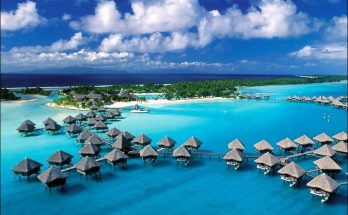
Pearl Beach Resort, Bora-Bora, Society Islands, French Polynesia

Pearl Beach Resort, Bora-Bora, Society Islands, French Polynesia Photographic Print
Pitamitz, Sergio
9 in. x 12 in.
Buy at AllPosters.com
Framed   Mounted

The precise routes taken by the fearless explorers are not known. The migrations were many and were spread over centuries of time. Also the small companies of adventurers and scouts and the larger companies of immigrants came by different routes. The route through Java to the Fiji Islands and eastward is marked by stranded remnants of Polynesians at Futuna (Erronan) in the New Hebrides, at Rennel in the Solomons, and at the Ontong Java (Lord Howe Islands).

The Polynesian settlement at Nukuor in the Caroline Islands may mark a northern route by which immigrants came through the Marshall Islands, Gilbert Islands, and Ellice Islands to Samoa and perhaps to Hawaii. It is possible that some adventurous companies came by a yet more northern route through the Marianas Islands or the Carolines directly to Hawaii. After immigrants had become established in such places as Samoa and Tahiti, these centers probably were used as bases for exploration of islands in their vicinity.

When the Polynesians came

Some Polynesians speak of their former homeland as “Hawaiki,” a faintly remembered faraway region from which many choice things came and to which the souls of men returned after death. The first emigrations from this homeland took place so long ago that the record is lost. But at the beginning of the Christian era colonists were in the Pacific, and it is known that during the eighth and ninth centuries eighty-five islands and island groups had been discovered islands lying far apart on both sides of the equator.

The Maoris of New Zealand trace their descent from immigrants who reached the islands about the year 1400. But these immigrants had learned about the country from earlier voyagers and came with their wives and children, carrying with them the sweet potato and taro, their household idols, medicinal plants, and domestic animals. They found New Zealand occupied by people of their own race, who had come from different places, and learned that the Chatham Islands lying eastward across 500 miles of stormy sea had been settled.

As early as the thirteenth century the geography of the Pacific was fairly well known. The colonists were familiar with the mountains, volcanoes, rivers, reefs, and forests and knew the regions of large rainfall and small rainfall and the direction of winds and currents. All this was before Columbus had discovered America, or Balboa the Pacific; before Magellan had crossed the Pacific to the Philippines.

Pioneer navigators

Long before European navigators had ventured far from land, Polynesians were sailing back and forth among the dots of land in the broad Pacific, making voyages thousands of miles in length. The Polynesian outposts in the Carolines and at Easter Island are nearly 9,000 miles apart and 3,800 miles of water lie between Hawaii and New Zealand. The route from Tahiti to New Zealand, used many times by Polynesian boats, is 2,200 miles in length. Yet these widely separated lands and intervening islands were not only known but were settled and served as distributing points for the shoots and seeds of such food plants as the banana, coconut, yam, breadfruit, and taro. Even the west coast of America may have been visited by adventurous navigators.

Long voyages

The facts about some of these voyages are known. Four early trips from Hawaii to Tahiti, 2,400 miles, are recorded. Uenga, a twelfth-century sea rover, sailed from Samoa to Tongareva, thence to Tubuai, and through the Tuamotus to Tahiti. The entire journey covered about 4,000 miles, most of it against the trade winds. Tukuiho, sailing from Rapa, discovered Rapa-nui ( Easter Island) after a voyage of 2,500 miles with no intervening stopping places. Karika, a Samoan chief, discovered and colonized Rarotonga, and the thirteen voyages of Tangiia cover a distance of more than 18,000 miles.

No compass used

The Polynesians readily made their way across the ocean without the aid of a compass or a log book. During the daytime they guided themselves by the sun, by the flight of birds, and the shape and color of clouds, and in stormy weather by the trend of the waves driven before the prevailing winds. A man with a knowledge of clouds and rainbows and winds ranked high in the esteem of the people. Some of the Pacific peoples made crude charts on which the trends of the wave crests in the trade wind belts were indicated by parallel sticks stretched on a frame, and the number and position of the islands included on the chart were shown by little pieces of stone or coral placed in proper position.