Travel Culture

Destination No. 3 Union Station, Washington, D.C.

Union Station, Washington D.C. Art Print

Union Station, Washington D.C. Art Print

12 in. x 8 in.
Buy This Allposters.com

Annual Visitors: 37,000,000

Opened in 1907, this busy station shuttles some 12,500 passengers daily in and out of the city. But it also handles serious tourist traffic: 37 million who pass through to take in the impeccably mixed architectural styles throughout the colossal building: from Classical to Beaux-Arts to Baroque. More than 70 retail outlets make Union Station a shopping destination, and it’s also a jumping-off point for many D.C. tours.

Destination No. 4 Las Vegas Strip

Las Vegas II Art Print

Las Vegas II Art Print
John Clarke
28 in. x 28 in.
Buy This Allposters.com

Annual Visitors: 29,467,000

Sin City was hit hard by the recession, but don’t bet against this legendary destination, which got a boost from the summer 2009 blockbuster The Hangover. Last year, 79 percent of tourists (29,467,000 people) chose to stay at hotels right on the Strip like Caesar’s Palace—the choice of the movie’s zany four-pack. And why not? Roll out of bed and onto the Strip to catch the Bellagio fountains in action, shop, gamble, and, of course, people-watch (which can get especially fun later at night).

Destination No. 5 Niagara Falls, New York and Ontario

American Falls, Niagara Falls, New York

American Falls, Niagara Falls, New York

12 in. x 16 in.
Buy This Allposters.com

Annual Visitors: 22,500,000

Straddling the borders of the U.S. and Canada, this massive waterfall spills about six million cubic feet of water—from a height ranging from 70 to 188 feet—every single minute. While there are about 500 taller waterfalls in the world, Niagara Falls is spectacular for its sheer power. It’s also more accessible than many major falls, a short flight or drive for millions of regional tourists.

World’s Most-Visited Tourist Attractions

USA Map II Art Print

USA Map II Art Print
Aaron Foster
36 in. x 26 in.
Buy This Allposters.com

Embrace the wisdom of crowds by adding the world’s most visited tourist attractions on your Bucket List.

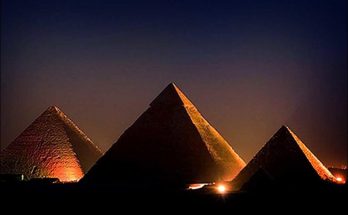
Ever heard of Everland and Lotte World? Most Americans have never planned a trip to the South Korean amusement parks, but they rank among the world’s 50 most visited tourist attractions, beat the great pyramids (4 million), Taj Mahal (3 million) and Stonehenge (1 million). And there are more surprises.

How we choose to spend our vacation time, says a lot about what we value, and despite or perhaps because of-the continuing global economic crisis, we travel more than ever. International tourists were up 6.6 percent in 2010 according to World Tourism Organization. China deposed Spain as the third most visited country with 55.7 million foreign arrivals, while France and the U.S. held their first and second place ranking.

Like it or not, amusement parks just as appealing in these countries when they are in South Korea. Disneyland Paris drew the same number of visitors (10.5 million) as the Sacre-Coeur, and two of the world’s 10 most visited tourist attractions are Disney parks. America also dominates our list. Some credit goes to the weak U.S. dollar, which drew 8.7 percent more foreign tourists in 2010 than the previous year and probably caused many Americans to explore within our vast borders.

To tally up the world’s most visited attractions, we gathered the latest information from the sites themselves or from government agencies, industry reports, and reputable media. So what is the most visited tourist attraction in the world? And 39.2 million people can be wrong?

I Love New York City I Love You NY Postcard postcard
I Love New York City I Love You NY Postcard by made_in_atlantis
View more I love new york city Postcards

View Top 5 Most-Visited Tourist Attractions

No. 1 Times Square, New York City

No. 2 Central Park, New York City

No. 3 Union Station, Washington, D.C.

No. 4 Las Vegas Strip

No. 5 Niagara Falls, New York and Ontario

Sixties Bands – Music was so loud and so heavy

Jim Morrison - The Doors

Jim Morrison – The Doors
Buy This Allposters.com

Music was so loud and so heavy that it did have an aggressive quality—so that it is no surprise that in 1969 a group formed that called itself War.

This use of high culture came from the fact that a new socio-ethnic group entered popular music in the years 1964-69: middle-class white kids who had gone to good suburban high schools as well as college. Aside from the Motown groups, Sly and the Family Stone, Jimi Hendrix, Otis Redding, and a few others, the major rock acts were white. Let’s take the personnel of the following sixties bands: Buffalo Springfield, The Byrds, The Doors, Iron Butterfly, Jefferson Airplane, the Lovin’ Spoonful, and the Mamas and the Papas. In the specific case of the Buffalo Springfield, the group consisted of: Neil Young, Stephen Stills, Richle Furay, Dewey Martin, and Bruce Palmer. No ethnic names there at all. In fact, there are only three ethnic names in all of these groups put together: Zal Yankowski of the Lovin’ Spoonful (Jewish); Ray Manzarek of The Doors (Czech); and Norma Kaukonen of the Jefferson Airplane (Finnish).

Elvis Jailhouse Rock Tin Sign – Elvis Dancing with Jail Costume

The first two Elvis Presley albums, both on RCA in 1956, neatly illustrate the basic dichotomy: Elvis Presley shows him onstage, eyes shut and mouth wide open, with his guitar thrust in the air, while Elvis has him seated in a staged pose, strumming his guitar. Here is the musician, they seem to say, and here are his musical instruments, his primary materials: his voice and his guitar.

Elvis Jailhouse Rock

Elvis Jailhouse Rock
Buy This Allposters.com

Elvis Presley in Jailhouse Rock T-Shirt

Elvis - Jailhouse Rock

Elvis – Jailhouse Rock
Buy This Allposters.com

With Elvis Presley the teenage audience realised that it could now express itz own identity, even within the world of consumer culture. In the 1960 songs in which women are part of the continuing love relationship, the male is clearly the dominant figure. Elvis Presley in “It’s Now or Never” best exemplifies this theme:

It’s now or never.
Come hold me tight.
Kiss me, my darling.
Be mine tonight.
Tomorrow will be too late.
It’s now or never.
My love won’t wait.

Communist era habits at Hvar Island in Croatia

Hvar Island, Croatia Photographic Print

Hvar Island, Croatia Photographic Print
Peter Adams
16 in. x 12 in.
Buy This Allposters.com

I had reached Capri by a circuitous route, driving down the coast of the former Yugoslavia before taking a car ferry across the Adriatic to Italy. My intention was to see what the war between Serbs and Croats had done to the famous Dalmatian coast and, in particular, to a favorite island, Hvar (pronounced ‘var).

The start of this drive had been anticlimactic. Instead of the war-torn country I was braced for, everything along the coastal highway was operating normally, the ferries were running on time, and the hotels were brightly lit and in good repair. The only difference from my visit in 1989 was the almost complete absence of tourists, but that I was very happy to live with. (The Dalmatian coast is Germany’s and Austria’s easiest access to the Mediterranean, and in a normal summer it is hit by a blitzkrieg of family vacationers.) It was only later, while taking a shortcut inland from Zadar, that I found myself driving through miles of devastation, with village after village systematically destroyed.

The islands of the Dalmatian coast are the most architecturally beautiful in the world. In the fourteenth and fifteenth centuries, the warring between Venice and Ragusa (Dubrovnik) left a legacy of handsome fortified cities built of honey-colored stone, of which Hvar’s is the finest. It is fashioned around an enormous piazza, a Baroque cathedral at one end, a small-boat harbor at the other, and is flanked by Gothic Venetian palaces. Occupying one corner is a building known as the Arsenal: It is topped by a theater that was built in 1612, when Shakespeare was still alive, and is claimed to be the oldest public theater in Europe.

Along with other islands of the Dalmatian coast, Hvar was untouched by the war, except for being used to house refugees. At one time, there were twelve thousand of them, many from the most brutal areas of “ethnic cleansing”: Mostar and Vukovar. Being mostly Muslim peasants, few adapted to island life, and almost all left at the earliest opportunity. Apart from harvesting the lavender crop, grown on the east side of the island, there was no agricultural work for them todo on Hvar.

In trying to reestablish its tourist trade, Hvar, along with the rest of the former Yugoslavia, finds itself in an unfamiliar position. While other Eastern European nations have spent the last seven years slowly adapting to the needs of sophisticated Western travelers, Croatia and Serbia have, because of the war, been standing still. There was a time when, in tourism terms, Yugoslavia was the most Westernized of the Communist nations-but no more. It was a shock to revisit Hvar and find so many of the old Communist-era habits still in place: waiters staring at their shoes as you try to get their attention; officious managers directing you unapologetically to the worst table or the worst room in the house; charmless staff who do not even offer a good morning, let alone help with your bags; and doormen who look amazed when you ask for an umbrella in the pouring rain. I noted all of those things in Hvar’s four-star Palace Hotel. Nothing was any worse than it had been on my previous visit, but seven years have passed and expectations have changed. The most frustrating thing is that the Palace, beautifully sited between harbor and piazza, behind an exq uisi te sixteenthcentury loggia, has the potential to be one of the prettiest small hotels in Europe.

Woman walking in narrow cobblestone alley, Stari Grad Town, Hvar Island, Dalmatia, Croatia

Woman walking in narrow cobblestone alley, Stari Grad Town, Hvar Island, Dalmatia, Croatia
John & Lisa
18 in. x 24 in.
Buy This Allposters.com

Now that the war is over, will a change of attitudes come? I was alarmed to learn that Hvar’s ten hotels, including the Palace, have been merged into a single company that is more than fifty percent bank-owned and thirty-eight percent worker-controlled-s-not, on the face of it, a formula for sophisticated new thinking. The most hopeful signs are in the little restaurants of the old town, which are energetically run by eager yo ung entrepreneurs. One wai ter searched for me all over town to return a guidebook I had accidentally left behind.

Hvar is still one of my favorite islands-with its Venetian piazza and lavenderscented hills, it is too beautiful not to be-but I am looking forward to the day when a new generation takes over from those old Palace timeservers.

Vernacular architecture, the high architecture of Hvar, is what most islands are about. And because of the cultural isolation, the constraints on available materials, and the ingenious solutions required by the need to relate to the sea, island architecture is an especially rich vein of folk art.

Greece, of course, has the most instantly recognizable vernacular architecture: not only the white-cube style of the Cyclades, so beloved oftourist posters, but the jaunty red pantiles of northern Greece and the neoclassical pediments of the Dodecanese.

Despite their touristy ambience, Santorini and Mykonos have the two supreme white-cube towns, and nobody can deny that, of the two, Santorini’s has the more dramatic situation, clinging a thousand feet up to the precipitous lip of a sunken volcano. It makes a perfect cruise-ship stop, and the view is a must for first-time visitors; but for me, that is where the attraction ends. Santorini’s town, so pristine and . peaceful from a distance, is unexpectedly tacky at close quarters. The treadmill of backpackers and sightseers arriving briefly to register the view before squeezing onto the narrow black sand beach gives it a feeling more of a transit camp than of a lazy Greek island. Mykonos, too, suffers from an excess of visitors, but it manages to receive them with a sense of style and chic that has been lost on most other major tourist islands. On my trips to Greece, I always enjoy spending a few civilized days on Mykonos, but “Been there, done that” is my normal response to Santorini.

Continue Reading >>

The Rediscovery of Africa

Mystic South Africa

Mystic South Africa
Gayle Ullman
22 in. x 36 in.
Buy This Allposters.com

Little over a hundred and fifty years ago a young scots surgeon named Mungo Park, more dead than alive from months of quenching travel, rode through Saharan sand and thorn into the remote city of Segu on the upper reaches of the river Niger.

“Looking forwards,” he would write, “I saw with infinite pleasure the great object of my mission — the long sought-for majestic Niger, glittering to the morning sun, as broad as the Thames at Westminster, and flowing slowly to the eastward.”

Ever since Ptolemy, sixteen centuries before, men had written on maps that the Niger flowed to the westward. Arabs of the Middle Ages, true enough, had known the middle course of the Niger for what it really was; but Europe, newly considering Africa in times of mercantile expansion, could be sure of nothing of its geography but the outline of the coast, and a little, here and there, of the obscure lands beyond.

“The course of the Niger, the places of its rise and termination, and even its existence as a separate stream are still undetermined,” declared the prospectus of the African Association, founded in London in 1790 for “Promoting the Discovery of the Interior Parts of Africa,” and it resolved that one of its explorers “should ascertain the course, and if possible, the rise and termination of that river.”

Mungo Park perished on the Niger before he could plot its course to the sea, but others followed. Within seventy years or so the main geographical facts were fixed and clear upon the continental map, and one misconception after another was corrected, one zone of ignorance after another filled with detail. African discovery took its place among the triumphs of the nineteenth century. The geographical myths and legends disappeared; in place of these, mapmakers could record the knowledge of sand and swamp, forest and savannah, snow-capped mountain range and bracing highland that the discoverers had won.

A similar process of discovery is now occurring, about a hundred years later, in the field of African history. Historians and archeologists — British, French, African, Italian, Belgian, American — have embarked on journeys of historical discovery that parallel the geographical ventures of Park and Clapperton, Caillié and Barth, Livingstone, Stanley, and so many more. What the nineteenth century achieved for the geography of Africa the twentieth is well towards achieving for its history; and once again the truth these pioneers are finding has proved, often enough, the reverse of what the outside world had generally believed.

Thus the chart of African history, so lately bare and empty and misleading as the maps once were, begins to glow with illuminating detail. Bearded monsters and “men whose heads do grow beneath their shoulders” begin to disappear; and humanity, in all its smallness and its greatness, begins to emerge. And it begins to be seen, if fleetingly and partially as yet, that the writing of African history is not only possible and useful, but will be as well a work of rediscovery — the rediscovery of African humanity.

Continue Reading >>

More Travel Articles and Tips >>

Brooklyn Bridge in Blue Night Poster – New York City Art Prints

Blue New York City Poster Print print
Blue New York City Poster Print by made_in_atlantis

New York City and Brooklyn Bridge

Up through Brooklyn and along the great bridges there is continuous travel by trolley, motor, and foot, from early in the morning. Before nine o’clock the tide is at its flood. Around the New York exit of the Brooklyn Bridge the currents from many directions meet and mingle to make a veritable whirlpool of humanity that circles and eddies, foams and dashes, gets mixed up in a roaring swirl, then collapses in froth, dissipates, and finally trickles away in small streams to various points of the compass. Of course there is a blocking of traffic, and occasionally an accident, due to the rush off or on the cars, that produces confusion, excitement, loud protest, or angry denunciation. But this, though a not unusual occurrence, always leaves the pushed and hustled crowd more or less indifferent. Everyone knows that the thoroughfares are insufficient during “rush” hours; but they do not know how matters can be helped.

There is less of a crowd at the Williamsburgh Bridge because it is not the most direct route to the lower part of the city. It is one of the ways by which those who do business in the middle Broadway region travel, and it contributes its sum to the mass that each morning moves into the city; but it lends not directly to the congestion of the lower town. Still, though it is not a direct way, it adds something, like the ferries beneath it that keep coming and going from shore to shore. Time was when the ferries at South and Wall and Fulton streets were the only means of getting into the lower town from Brooklyn, and they were then, in the morning hours, often loaded with people to the gunwales; but since the building of the new bridges and the opening of the Battery tube, they have been used but little. Eventually their occupation will be gone completely.

Thousands upon thousands swarm into the city from Long Island. Bridges creak and ferries strain and tunnels roar with the weight of them; and the rasp and shuffle of their feet along the decks, along the bridge approaches, and along the flagged streets help make that deep undertone of the city to which the electric cars add the high note.

Yet Brooklyn and beyond is only one source of intake. The shores of the Upper Bay, Staten Island, Coney Island, send up their quota by steamer and ferry-boat; while from the Hudson, reaching far into the state, steamboats and railways are bringing down and disembarking more thousands to swell the throng. But the body of commuters that comes in from New Jersey is, perhaps, the greatest of them all.

Probably four hundred thousand people is a moderate estimate for those who daily travel into New York from across the Hudson. It is nearer, no doubt, to a million. The local trains on all the railways through New Jersey are crowded from seven to ten in the morning, and the double-decked ferries that push and snort and whistle their various ways from shore to shore look black with massed humanity. Again, as on the East River side, there are long tunnels under the Hudson, carrying passengers in swift electric cars; and these are lessening the crush on the ferries for the time being, but it will not be long before both tunnels and ferries are once more inadequate. The population in New Jersey that comes and goes daily to New York is increasing by thousands each year, and the greater the ease in getting to town, the better the traveling facilities, the more people there are willing enough to live in the country in preference to the crowded quarters of the upper city.

Blue New York City Poster Print, New York City Skyscrapers Brooklyn Bridge Posters, New York City Skyscrapers at Night, Blue Night Moonlight Effect NYC Skscrapers Photo Picture, Manhattan Financial District at Blue Night Pop Art Style Digital Photo Image