Italy

Why Americans go to Europe for what?

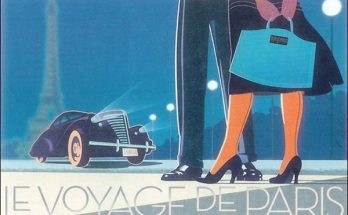
Voyage de Paris II

Voyage de Paris II Art Print
Brier, David
36 in. x 24 in.
Buy at AllPosters.com
Framed   Mounted

Americans go to London for social triumph, to Rome for art’s sake, and to Berlin to study music and to economize; but they go to Paris to enjoy themselves. And there are no young men of any nation who enter into the accomplishment of this so heartily and so completely as does the young American.

Paris determined to see all that any one else has ever seen, and to outdo all that any one else has ever done, and to stir that city to its suburbs. He saves his time, his money, and his superfluous energy for this visit, and the most amusing part of it is that he always leaves Paris fully assured that he has enjoyed himself while there more thoroughly than any one else has ever done, and that the city will require two or three months’ rest before it can readjust itself after the shock and wonder due to his meteoric flight through its limits. Paris, he tells you, ecstatically, when he meets you on the boulevards is “the greatest place on earth,” and he adds, as evidence of the truth of this, that he has not slept in three weeks. He is unsurpassed in his omnivorous capacity for sight-seeing, and in his ability to make himself immediately and contentedly at home.

The American visitor is not only undaunted by the strange language, but unimpressed by the signs of years of vivid history about him. He sandwiches a glimpse at the tomb of Napoleon, and a trip on a penny steamer up the Seine, and back again to the Morgue, with a rush through the Cathedral of Notre Dame, between the hours of his breakfast and the race-meeting at Longchamps the same afternoon. Nothing of present interest escapes him, and nothing bores him. He assimilates and grasps the method of Parisian existence with a rapidity that leaves you wondering in the rear, and at the end of a week can tell you that you should go to one side of the Grand Hôtel for cigars, and to the other to have your hat blocked. He knows at what hour Yvette Guilbert comes on at the Ambassadeurs’, and on which mornings of the week the flower-market is held around the Madeleine.

While you are still hunting for apartments he has visited the sewers under the earth, and the Eiffel Tower over the earth, and eaten his dinner in a tree at Robinson’s, and driven a coach to Versailles over the same road upon which the mob tramped to bring Marie Antoinette back to Paris, without being the least impressed by the contrast which this offers to his own progress. He develops also a daring and reckless spirit of adventure, which would never have found vent in his native city or town, or in any other foreign city or town. It is in the air, and he enters into the childish goodnature of the place and of the people after the same mariner that the head of a family grows young again at his class reunion.

The Château Rouge was originally the house of some stately family in the time of Louis XIV. They will tell you there that it was one of the mistresses of this monarch who occupied it, and will point to the frescos of one room to show how magnificent her abode then was. This tradition may or may not be true, but it adds an interest to the house, and furnishes the dramatic contrast to its present wretchedness.

Rome: The Roman Forum

Roman Forum, Rome, Italy

Roman Forum, Rome, Italy Photographic Print
Panoramic Images
24 in. x 8 in.
Buy at AllPosters.com
Framed   Mounted

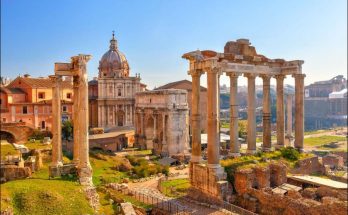
‘I need no ivory temple for my delight,’ wrote Propertius in Augustus’ day, ‘enough that I can see the Roman Forum.’ Here, from immemorial times, had been the meeting place of a civilization that was always positive. This Forum, so quiet in its ruins now, was filled with activity from the dawn of recorded history. Around its edges butchers, fruit-sellers, and money-lenders had their stands; in its centre were held public meetings and religious ceremonies closely bound up with the city’s practical life. If the past haunts the Forum, it is a past filled with less sinister figures than those which linger in the shadows of the Palatine above.

Nowhere in Rome has more human drama been crowded into so little space. Here, according to tradition, the men of Romulus had snatched as brides the maidens of the Sabine tribes. Here, too, was set the tragic, stirring tale of the centurion Virginius, and his daughter, Virginia, whom he stabbed with a knife from a nearby butcher’s shop to save her from a tyrant’s claim. Here legend placed the ancient story of Marcus Curtius’ leap into the unfathomable gulf yawning below the Capitol. Here Antony showed the Romans the body of the murdered Caesar and read them his will. Here, too, roused to fury by this sight and by the dead Caesar’s generosity, the people burned his body in their most honoured spot as a final tribute to his memory. And along the Forum’s Sacred Way, from the Arch of Titus up the Capitol hill, passed the triumphal processions of emperors and generals, returning victorious from the wars.

The Forum’s activities probably took place at first entirely in the open air. Later shops and temples were built and the great basilicas along the edges, which combined halls for courts and assemblies with space for shops. Throngs too large for these basilicas were addressed from the rostra, special platforms built for this purpose, or from the steps of the Forum’s temples. The Senate met in these temples, as well as in others throughout Rome, but its special home was in the Forum, in the Senate House, consecrated to Victory.

Julius Caesar, city planner as well as warrior and statesman, gave the Forum the general shape it preserves today. One of the most arresting spots in its whole area is the altar before the temple dedicated there by the Senate to mark the place where his body was burned in 44 B.C.

As power grew more and more concentrated in the hands of the emperors and their officials, public activities in the Forum became less important. But the place remained as unique in Roman memory as when Cicero had called it ‘the Forum in which all justice is preserved’. The emperors built larger and more elaborate forums for business and amusement, but this remained ‘the Forum’ or ‘the Forum of the Romans’, by virtue of its age and associations.

View Across the Roman Forum, Rome, Lazio, Italy, Europe

View Across the Roman Forum, Rome, Lazio, Italy, Europe Photographic Print
Miller, John
12 in. x 9 in.
Buy at AllPosters.com
Framed   Mounted

As Christianity gradually conquered paganism, the temples of the Forum were closed by imperial edicts, though these edicts were disregarded from time to time. For a while some of the temples were safeguarded as public monuments or kept for various uses. But the Gothic wars of the sixth century so drained the city’s resources that it would have been impossible to keep the old buildings in good repair, even had any considerable group wanted to preserve the remnants of paganism. The temples which survived did so largely because they were transformed into churches or because they were too massive to be pulled down easily for building material. The earthquake of 847, which damaged the Colosseum, probably hastened their destruction.

(more…)

Rome Low Cost Sightseeings

Tour Rome

Tour Rome Art Print
Yang, Eric
20 in. x 16 in.
Buy at AllPosters.com
Framed   Mounted

The Colosseum, of course, which charges no admission for entrance to its ground floor, and no admission at all to visit any part of the ruins on Sundays… Following that, drive out as far as you have time to go along the ancient Appian Way… It’s here that you’ll pass the several largest Christian Catacombs. Most interesting and significant of these are the Catacombs of Saint Sebastiano (once the burial place of both St. Peter and St. Paul), which are the second catacombs you’ll pass as you proceed along the Appian route.

The Vatican Museum and the Sistine Chapel are also musts. Remember that they are at the rear of the Vatican, a long walk from the front of St. Peter’s… Downstairs in St. Peter’s a number of glass-sided coffins containing bodies of the Popes, are on view… The figures inlaid on the floor of St. Peter’s show the lengths of other famous cathedrals, thus giving you an indication of the enormous size of St. Peter’s. In the Borghese Gardens, you won’t want to miss the fabulous Villa Borghese (sometimes called the “Galleria Borghese“), with its treasures of paintings, sculpture and furnishings. On the first floor, there are works by the great sculptor Bernini (his famous Rape of Persephone is here); on the second floor is Raphael’s “Descent from the Cross,” together with several Botticelli’s and a whole array of paintings by my own favorite, the master Caravaggio.

Finally, the grandest sight in Rome, to my mind, is the “Campidoglio” (Capitoline Hill), the sight of which has caused many a tourist actually to weep over its sheer beauty. The steps and approaches were designed by Michelangelo; the plaza holds one of the few classic bronze statues in existence-the Emperor Marcus Aurelius on horseback-which was discovered several centuries ago on the bottom of the Tiber, where it had been thrown by Roman-hating barbarians. When Michelangelo was asked to design a pedestal for the statue, he answered, “I am not worthy.”

Capri: A picturesque island and tourist attraction in Italy

Capri at Night

Capri is an Italian island in the Tyrrhenian Sea off the Sorrentine Peninsula, on the south side of the Gulf of Naples, in the Campania region of Southern Italy. It has been a resort since the time of the Roman Republic.

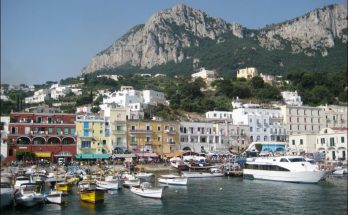
Features of the island are the Marina Piccola (the little harbour), the Belvedere of Tragara, which is a high panoramic promenade lined with villas, the limestone crags called sea stacks that project above the sea (the Faraglioni), Anacapri, the Blue Grotto (Grotta Azzurra), and the ruins of the Imperial Roman villas.

Capri is part of the region of Campania, Province of Naples. The town of Capri is the main centre of population on the island. It has two harbours, Marina Piccola and Marina Grande (the main port of the island). The separate commune of Anacapri is located high on the hills to the west.

The etymology of the name Capri can be traced back to the Greeks, the first recorded colonists to populate the island. This means that “Capri” was probably not derived from the Latin “Capreae” (goats), but rather the Greek “Kapros” (wild boar).

Capri - Italy

Capri can easily be reached by ship from Sorrento, Naples, Ischia (Porto) and Salerno / Amalfi. It is always good for a day trip. The island is rather small – about 1000 hectares for approx. 15000 inhabitants all together in the townships Capri and Anacapri. More exactly: It is 6170 m long, 1200-2750 m broad and 598 m high. But here you have a tourist season throughout the whole year. Tourists are just mixed up from as many nations as in Pompeii. Of course in the summer the island gets overcrowded by trippers and one has taken into serious consideration to limit the ferry connections.

Top tourist attraction is the Blue Grotto “Grotta azzurra”. If Capri is overcrowded with tourists you may even have to wait for hours. But if you reach Capri rather early (e.g. before 10.30), it makes sense, to go straight to the grotto, before still more people arrive at the Marina Grande. There are many boats waiting to take you directly from Marina Grande to the grotto. But looking at the local situation you can see, that it is probably better (and at lower cost), to go by bus to the Blue Grotto. Take the funicolare (cable railway) to Capri-Town. The ticket counter (Biglietteria) for the funicolare is at the end of the quay (to the right). At the piazzetta in Capri keep right to get to the small “bus terminal” and take the bus to Anacapri. There is another “bus terminal” in Anacapri, where you can take the bus to “Grotta azzurra”. The tickets for the bus (at present 1.40 Euro) can always be bought on the bus.

Vintage Travel: Destination Venice Art Print

Destination Venice

Destination Venice Giclee Print
Chaden, Tina
9 in. x 12 in.
Buy at AllPosters.com
Framed   Mounted

venice, venezia, venice posters, vintage venice posters, vintage travel ads, travel posters, italy, italy posters, travel destintions

Vintage Travel: Destination Rome Art Print

Destination Rome

Destination Rome Giclee Print
Chaden, Tina
9 in. x 12 in.
Buy at AllPosters.com
Framed   Mounted

A League of Latine cities is said to have been founded in the eighth century, and Rome under her kings gradually attained in it a leading position. The expulsion of the kings and the introduction of an Aristocratic government, with two consuls and a governing assembly, the Senate, caused internal dissensions which brought the Romans again under the rule of the Etruscans, until, after a long period of strife, the conditions were reversed and Rome with the Latines and Sabines conquered all round.

This development was interrupted by the Keltic invasion, which in the beginning of the fourth century descended on Italy from over the Alps. Rome was overwhelmed but soon recovered herself and drove back the Kelts, who then settled permanently in the Plain of the Po. No energetic attempts were made to Latinize them till after the Second Punic War. The powerful mountain tribes gave the Romans much trouble, as we learn from the accounts of the Samnite wars, the more so as these nations had just before destroyed the Etruscan rule in Campania and had laid hands on several of the Greek colonies. After the overthrow of the Samnites, Lucanians, and other nations of Southern Italy, the Greek towns on the coast necessarily became subject to Rome. Tarentum held out the last by inviting over Pyrrhus, the warlike but unstable King of Epirus, and made a successful stand during a series of years until it fell in 270 B.C., and Rome was acknowledged as the predominant power from the Apennines to the Straits of Messina.

This war with Tarentum had forced Rome, owing to the expedition of Pyrrhus to Sicily, to interfere in the politics and trade of the island. Since the overthrow of the Etruscans the dominion of the Tyrrhenian Sea had fallen into the hands of Rome. Thus she became a rival of Carthage, who had treated the Western Mediterranean from Africa and Sicily onwards as her own domain and had made the utmost of it. Assistance given to the Greeks of Sicily and an alliance with the Mamertines of Messina brought about a conflict with Carthage, leading to the First Punic War and a delimitation of the respective spheres of influence. Carthage surrendered the island but compensated herself richly in Spain. Sicily was shared between Rome and Hiero of Syracuse, and became the first Roman Province.

rome, rome posters, vintage travel ads, travel posters, italian travel ads, travel destinations, europe posters, italy, italy travel

Italy: North and South

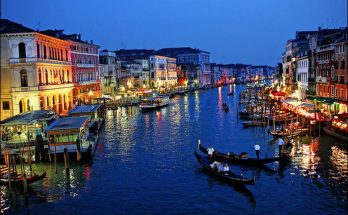
Venice at North Italy

Until the victory of the Left in 1876 the Ministers who governed Italy were almost all Northerners, who considered the Southerners as lively, witty and eloquent beings but politically immature. In truth, the only immaturity was to be found in the heads of the “Piedmontese”, as was said at Naples after 1860, when they sat themselves down to serve out judgments on their brothers of the South. Only Cavour had foreseen the importance of an understanding with the South, but he died too soon.

After 1876 many of the most important Ministers were often from the South, but they belonged to the Left whose habit and rôle had been to criticize, not to govern, and that remained for long the victim of a reverential respect for high functionaries, who were honest but incapable of understanding new problems; people for whom going to the South as prefects or magistrates was worse than a punishment, almost a dishonour. The few Ministers of the Left who took office, like Nicotera, violated the law; and this increased the diffidence of the Direttori generali in regard to them.

For the rest, never in our history has there been a constant passing to and fro between the North and the South, nor do Northerners go to live in the South and vice versa. Only one of our ancient classical writers knew and loved the South: Boccaccio. One of our delights in reading Dante is to discover at every moment a verse which describes with an unforgettable touch the most varied aspects and landscapes of our country; but there is not a single one of the South; for Dante never described what he had not seen.

Petrarch never went to the South, nor Ariosto, Machiavelli nor Manzoni. Leopardi was in Naples, but he was ill; Mazzini was there as a prisoner.

Italy: The difference between North and South

Italy: The difference between North and SouthWhy such a separation? The difference between North and South is not greater in Italy than in France or in the United States; and it is less than in Germany. But in Italy the actual division is perhaps more clear cut; which would explain how the French of Charles VIII could sing: “Nous conquerons les Ralies…” But if the division is sharper it has nothing to do with pretended differences of “race”, that is to say, of Greek influences in the South and Germanic or Celtic in the North. The reasons are historical and incidental: namely, that the States of the Church dividing the peninsula in two, separated the Neapolitan Kingdom from the rest of Italy in a more radical way than the division between Piedmont and Lombardy or between Liguria and Tuscany.

The full material reunion of the whole peninsula was the result of the railways. One day, in a dream à la Rousseau, Napoleon imagined that Calabria, Sicily and Sardinia were moved towards the coasts of Latium and Tuscany, swelling out an Italy too elongated for his taste as a collector of cannon-fodder. One of the principal merits of the Liberal governments from 1860 to 1890 was the creation of a vast net of rapid communications from the Cenis to Trapani, and they did this with a series of bridges, galleries and other engineering feats more complicated and costly than in any other country of Europe.

It was probably the long period of the isolation of the “Kingdom ” — as the country from Velletri southward is called — that made of our South an island of philosophers and thinkers, from Giordano Bruno and Campanella to Vico and Benedetto Croce. Among the philosophers of Northern Italy in the first half of the nineteenth century, such as Rosmini or Gioberti, foreign influences are very visible. It is not so in the South, where Benedetto Croce himself has only taken from Hegel a certain amount of material for the elaboration of a new way of thought.

Those who, half astonished and half disgusted, are saddened by the haughty attitude that certain Northerners assume towards the Southerners, ought to feel rather pity than anger. It is everywhere thus; a stupid industrial of Flanders thinks that he is better than the most intelligent Provençal; a merchant of Barcelona laughs at the poetical vein that makes life in Andalusia so charming; a fat Prussian grumbles at the beer-house: “The Bavarians are the link between a man and an Austrian…”

It is for us Italians of the North to remember and to cause to be remembered that it is the South which has given to Italy the purest champions of the things of the mind — to begin with the anatomists of the School of Salerno, who first in Europe braved the fury of the ignorant by going in the darkness of the night to the cemetery to steal the corpses by which they might learn the secrets of life; that it is the South which has given us the earliest and most devoted martyrs of our Risorgimento, among them those who were hanged under the Republic of 1799; that from their ashes arose, as avengers, the Spaventa, the Settembrini, the De Sanctis and all the rest.

For my part, if it were not that my stay between Bari, Salerno and Naples was made longer by a far too slow military tactic for which Italy had to pay with cities destroyed, due to the blindness and fixed ideas of certain foreign governments, I could bless heaven that I remained for two years in the midst of a civilization far more refined than our own. I do not believe that there was in any other spot in Italy a refuge like that of my house at San Pasquale a Chiaia, a refuge from which, through idleness, I did not descend into the shelters even during the most violent bombardment, but in which I had to pass a night in which I had the responsibility of the life of Croce, for two days my guest at Naples; we went down, the shelter was full of people — doctors, professors, lawyers, the typical Neapolitan middle classes — and Croce began to tell anecdotes of the time of Ferdinand II and then to discourse on Belli and Porta, of whom his hearers knew little; and when the alert ceased, all said: “What a pity ! Let us hope for tomorrow evening…”

Italy and Foreign Visitors

Italy and Foreign VisitorsThe railways powerfully contributed to the fusion of North and South, after the historical dissolution, so long resisted, of the Pontifical State. But it was easy for the Italians to find one another; the obstacle had been there a long time, it is true, but it was artificial. For foreigners, however, the result was the very opposite; the railways — and later, the rapidity of the automobile — made it less easy for them to enter into any real relation with Italian life, with the mental and spiritual life of ideas not only in the great cities, but in the quiet smaller cities of the country-side, and the provinces. After the advent of the railways, books appeared by foreigners, often full of beauty, on the Greek ruins in Calabria, on Milan or on Venice, on art in Sicily or in the Uffizi at Florence; but we no longer found among us a Goethe, a Stendhal, a Browning, a Shelley, wandering about among the contadini and humble folk.

In boyhood I had discovered at home, to my delight, some old guide-books of Italy of the eighteenth century, and I have never forgotten the emotion that I received from a Guida di Viaggio in Italia per un Gentiluomo Polacco, and its appendix, in four columns, of Conver sazione in italiano, latino, francese e polacco. There was a little of everything, both in the book and in the “Conversazione”, and almost everything was dealt with together as in life: archaeology and cookery, music and women, high roads and receptions. It is a great contrast to those famous Sensations d’Italie in which Paul Bourget goes into ecstasies before Sienese pictures of the second class, and which seems like a cemetery of ideas that have been embalmed. One feels that authors of this kind can never really have lived in Italy, that, driven by the contracts with the publishers, they are only thinking of the magnificent pages they will build up from the notes scribbled in their pocket-books, and for this very reason there utterly escapes them that integration of the ancient and the actual which alone allows us to understand a living nation.

The Italian — and above all, the Italian of the people — is so complex and yet at the same time so simple that one can only smile at the foreigners who think they have discovered the key to the Italian character after passing a year or two in the peninsula.

It seems like a paradox, but I believe it is easier to understand the complexity of the Italian than his simplicity. How can a contadino or an Italian artisan be anything but complex when he is such an infallible judge of the moral character of the “foreigner”, of the “signore” with whom he has to deal? Woe to the new proprietor of a podere or of a villa, woe to the foreigner who has rented a house or apartment for three years, if the people around him sum him up as “proud” or “overbearing”; very soon there will be an emptiness about him and he will obtain nothing from anyone, even though he is ready to pay double what other foreigners are paying — “forestieri” and “signori” who are recognized as “gentile” and “alla mano”.

To understand a people, a foreign nation : that is a business in which intelligence and culture only serve if they are enlivened by human sympathy.

What makes the traveller is not the distance of the country visited but the capacity to see, to immerse himself in the spirit of the country to which he has travelled. I have seen the standardized traveller in Mongolia, and real travellers on the Lombard plain and in the villages of the Var. The capacity to understand is not to be acquired by literary experience, it is bought with our very life. The French who, wishing to penetrate beyond the museums, come to Italy saturated with Stendhal, and the Germans who come down with a Goethe in their hands, remind me of certain Oriental converts to Catholicism, who read in one of our Cathedrals the same Massbook as the ordinary crowd of the faithful : they read, but their emotion is not the same.

The Surface of Italy: Mountain, Hill and Plain

Hotel Vigilius in Northern Italy

A useful starting point for the study of the surface of Italy is a consideration of three main types of relief: mountain, hill and plain. Fig. 2.1 shows the distribution of these elements, the definition of which is based broadly on altitude, the mountain areas being mainly above 1,000 metres, though containing many valleys below this level, the plains consisting of level or gently sloping land below about 300 metres, whether coastal or interior, and the hill country comprising the intermediate areas. The land classified as plain (pianura) occupies a little over one-fifth of the total surface of Italy while hill country (collina) accounts for over two-fifths and the mountain country (montagna) for somewhat less than two-fifths.

Although the basis for the division into three main types of relief is altitude, both relative relief and slope conditions are broadly related to altitude. In the mountain regions relative relief is greatest, reaching as much as 3,000 metres between valley floors and adjoining mountain summits in the Alps, and 2,000 metres in the highest parts of the Apennines. In the hill country it may reach several hundred metres in places. The mountain areas, too, tend to be the most rugged, having the steepest slopes, though gently sloping areas do of course occur. Much of the hill country is however also greatly dissected and is characterised by steep slopes, even though relative relief is not great; on the other hand, some hill country consists of gently sloping low plateaux. In the plains, naturally, slopes are generally gentle and relative relief slight.

The Alps, the Apennines and the mountains of Sicily form an almost continuous belt of mountain country of varying width, extending in the form of an S some 1,300 miles in length from the extreme north-east of Italy, first west, then curving round to Liguria and extending south-east and then south through the Peninsula and finally running from east to west across northern Sicily. There are other small mountain areas both in the Peninsula detached from the main range of the Apennines as in Tuscany, and in the island of Sardinia.

Italy has only one large area of plain, the North Italian Lowland, which lies between the Alps and the Northern Apennines, but there are many smaller plains in the Peninsula and Islands, some at or little above sea level along the coasts, others at a considerable altitude, forming small interior basins.

Almost everywhere hill country intervenes between the mountains and the plains, as around the North Italian Lowland, and between the mountains and the coast, as in the Peninsula and Islands. The most extensive areas of hill are in Central Italy but like both mountain and plain this form of relief occurs in almost every region. In almost any sizable part of Italy, indeed, a bewildering variety of relief conditions may be found, but a contrast between the North and the Peninsula should be noted. In the North, a series of roughly north-south sections shows the same general sequence of mountain-hill-plain-hill-mountain. On the other hand, roughly south-west-north-east sections across the Peninsula, while almost invariably crossing some mountain and hill and usually some plain, differ appreciably in the arrangement of these elements at different places along the Peninsula.

Italy has been divided into complicated physiographic regions by more than one geographer and it should be appreciated that no single system of regions satisfies everyone, since the result depends on the emphasis given to such varying criteria as altitude, age of rock, type of rock or predominant type of land form. For example, a convenient break in altitude in the Apennines, separating two high mountain areas, does not necessarily coincide with a geological or structural change.