paris posters

Paris: Famous Places as Seen by Great Painters

starry night Paris: Famous Places as Seen by Great Painters

Starry Night over the Rhone, c.1888
Vincent van Gogh
12 in. x 9 in.
Buy This at Allposters.com

Paris is a city where nature has never worn out her welcome, but continues to thrive even in the ultra-modern quarters. The Seine with its shady banks and sunny quays provides a perfect haven of flowers and greenery, while the whole city is dotted with parks and gardens. The Impressionists and after them the Fauves roamed Paris with eager, understanding eyes, recording the tremor of the trees along the avenues, the shimmering surface of the river, old walls glowing in the sun, chimney smoke gathering into wisps of cloud above the rooftops. On monuments mellowed by time the faintest shades of color flicker as if seen across a tenuous veil.

This unique light of Paris, made of sunshine and mist, gives every element its rightful place and tone in the panorama. Even the Eiffel Tower, modern times’ great contribution to the silhouette of Paris, blends with the monuments of the past, a soaring, bodiless piece of architecture giving the full measure of the sky above the city. The best painters of the present day no longer linger over anecdote and detail; their broad synthetic vision embraces the seen and unseen treasures of a city as rich in past glories as it is rich in promise for the future.

The earliest paintings in which we can identify actual views of Paris date from the transitional period from Romanesque to Gothic, when outline drawing was coming back into favor at the expense of the monumental style. Definitely on the way out were the lavish gold backgrounds we find, for example, in the Psalter of St Louis, in which the scenes take place beneath the pinnacles, rose-windows and pointed arches of the SainteChapelle. Manuscript painting moved on from blue-and-red to shadings of color, to lively, freehand drawing, to the checkered backgrounds typical of the Parisian ateliers.

The Life of St Denis, a manuscript written by a monk named Yves and offered in 1317 in three bound folios to Philip the Tall, was illuminated by an unknown artist. The entire legend of St Denis, first bishop of Paris, is illustrated in detail, from the time when, still a pagan, he ranked as one of the leading philosophers of Athens, to the days of his conversion and subsequent mission to Paris where, with his companions St Rusticus and St Eleutherius, he suffered martyrdom on the hill of Montmartre; from there, says the legend, carrying his severed head in his hands, he walked a few miles northward to the village of Catulliacum 10, today called St Denis.

Each scene of the saint’s life is coupled with vignettes which, taken together, give a remarkably complete picture of life in medieval Paris. We see boatmen on the Seine ferrying barrels of wine, and an angler in his boat drifting with the current. At the foot of the towers, beneath the city gates, we see the crowds on the Grand-Pont: money changers, goldsmiths, street porters, jugglers, showmen with bears and monkeys, beggars, rag-pickers, wine-hawkers–an image of everyday life in Paris that was to change little for many centuries to come.

Between these early works and the high achievement of the Limbourgs and Jean Fouquet, what do we find? The great intervening figure is that of Jean Pucelle, leading chef d’atelier of a Paris that even then, in the 14th century, was an international art center, a hive of busy studios where expert draftsmen and illuminators produced a wealth of exquisitely illustrated manuscripts. Pucelle’s finest work is the Belleville Breviary, whose vellum margins he covered with ivy sprigs and foliage, with butterflies, dragon-flies and snails, and a whole fauna of whimsical creatures painted with a finesse and poetic realism that recalls “both the edge of a garden patch and a masterpiece of the engraver’s tool”

Shortly after Pucelle’s death in 1380 (the same year in which Charles V died), there occurred the revolt of the Maillotins 12, during which the furious populace lynched the tax collectors. Even so the city preserved a semblance of good government for the next thirty years, and it was with a heavy heart that the great satirist and ballad writer Eustache Deschamps took leave of Paris and the pleasures she offered:

Adieu m’amour, adieu douces fillettes,
Adieu Grand Pont, hales, étuves, bains,
Adieu Paris, adieu petits pastez!

Deschamps died about 1406. In the coming years Paris endured rioting, epidemics, famine, and an English occupation. But this did not prevent such proud lords of the realm as the dukes of Anjou, Burgundy and Berry, brothers of Charles V, and Louis d’Orléans, his youngest son, from patronizing artists and collecting works of art as passionately as Charles himself had done. Their vast estates, despite the troubled times, were covered with palaces, castles and chapels in which jewels, tapestries, sculptures and paintings from all corners of Western Europe were amassed–collections of incalculable richness as is proved by the inventories of the time. The most famous and memorable of these art-loving princes is the Duke of Berry.

A strong-minded man, avid of novelty and refinements, the Duke of Berry was continually on the move from one of his castles to another, invariably accompanied by his pet swans and pet bears. An insatiable collector of beautiful things and an unrivaled spendthrift, unstinting with artists whose work he admired, and always eager to have his portrait painted by them, he was–for all his faults–wise enough to prefer to live on in the eyes of posterity not as one ruler of a petty realm amongst many such rulers, but as a generous patron of the arts at whose court the good things of life were enjoyed to the full.

It was for him that Pol de Limbourg and his brothers painted about 1416 the incomparably beautiful miniatures known as the Très Riches Heures, now at Chantilly. Views of Paris figure in the background of several scenes contained in this Book of Hours, notably the exquisite illustration of the month of June in the Calendar. Here we see the tip of the Ile de la Cité with, on the right, the Sainte-Chapelle emerging from beyond crenelated walls “like a gigantic reliquary” (Marcel Poète) and symbolizing that successful union of the holy and the worldly life realized by St Louis. This view was made from about where the presentday Mint stands.

Another scene from the Calendar (month of October) shows peasants plowing and sowing in the shadow of the Louvre. So it must have appeared in the heyday of Charles V, when the king, abandoning the Palace where ghostly memories of the recent murders perpetrated there by Etienne Marcel and his cohorts gave him no peace, took up his residence at the Louvre, a magnificent chaos of battlemented towers, pointed turrets and steeply pitched roofs covered with sheet lead or glazed tiles, and topped with tall weather-vanes, finials, gables and so on.

Paris, 1947 – Love in the Louvre Poster

love in the louvre Paris, 1947   Love in the Louvre Poster

Paris, 1947 – Love in the Louvre Poster
23.875 in. x 35.75 in.
Buy at AllPosters.com
Framed   Mounted

Almost everything is ‘special’ about France. It is the home of haute couture and haute cuisine; of great writers, artists and philosophers. At its heart is Paris, the ‘Paris, France’ which is the goal of so many Americans. But the capital city is not the whole of France any more than New York is the whole of America. France includes the industriai North East; the valleys and peaks of the Massif Central in the Suth West; the rocky Atlantic coast of Brittany; the chateaux of the Loire; the French Alps and the sun and birightness of Provence and the Mediterranean Coast.

Paris is generally mild, with average temperatures of 76 in mid-summer. The Riviera is sunny throughout the year; the average temperature in January is 48.

Things Not to Do in Paris

paris art print Things Not to Do in Paris

Paris Art Print
37.37 in. x 12.98 in.
Buy at AllPosters.com
Framed   Mounted

Don’t… Spend all day at the Louvre or Musée d’Orsay

The Louvre and the Musée d’Orsay are Paris’s most celebrated museums, and yes, they do house some famous works of art. But don’t for a second think that they’re your only—or, indeed, even your best—options. The lines to get in can be harrowing in high season, the crowds are exhausting, and the sheer quantity of art on display is overwhelming. If the prospect of beating back the hordes seems like it will detract from the experience (and, really, how could it not?), don’t despair.

Instead… Get to know Paris’s lesser-known museums

Many of Paris’s smaller museums contain equally important and beautiful art—and are often more pleasant, since you won’t be elbowed out of the way by a photo-snapping swarm. You’ll find Monet’s famous Nymphéas (water lily) murals in the Musée de l’Orangerie (pictured), at the far end of the Tuileries Gardens. The Musée Marmottan is home to the world’s largest collection of Monets. And the Musée Rodin, housed in a luminous villa with a lovely garden, is one of the most romantic museums in all of Paris. Not in the mood for an art lesson? There are plenty of museums in Paris that focus on lighter and frothier fare, including fashion, wine, and money. Once you’ve discovered the pleasures of these intimate galleries, you might be hard-pressed to bother with the Louvre at all.

Don’t… Seek out bohemian ambience on the Left Bank

Sartre and de Beauvoir may have loved Les Deux Magots on the Boulevard St. Germain, but these days, this onetime hangout of intellectuals has all the authenticity of Times Square. You’re far more likely to find yourself cheek by jowl with your tourist brethren than eavesdropping on any famous philosophers. You may, however, find yourself delivering a tirade on the immorality of charging $16 for buttered toast and orange juice. Does gouging tourists for the privilege of sitting on a sidewalk mark the decline of civilization? Yes, indeed.

Instead… Find the “real” Paris on the Canal St. Martin

Bobo (short for bourgeois bohemian) hipsters have laid claim to the area around the Canal St. Martin, a once-derelict part of the tenth arrondissement that now buzzes with cafés and hip boutiques, particularly along the Rue Beaurepaire. Settle at a sidewalk table at Chez Prune, the see-and-be-seen ground zero for this trendy Right Bank ‘hood, sip your café crème, eavesdrop on the locals, and enjoy the views of the picturesque canal—and bask in the smug knowledge that you’ve found a corner of real Paris, far from the touristy hordes.

Travel Art: April in Paris Art Print

april in paris Travel Art: April in Paris Art Print

April in Paris Art Print
Pergola, Linnea
27 in. x 35 in.
Buy at AllPosters.com
Framed   Mounted

Paris alone has more than 8,000 restaurants and bistros, each with its own specialite de la maison. All over France are restaurants which serve a special Tourist Menu, including hors d’oeuvre, a main dish chosen from the day’s a la carte menu, cheese and dessert. Do not miss escargots, snails bathed in garlic, butter and parsley; pate de foie gras; soupe a l’oignon, onion soup usually served in china tureens. In Provence you must certainly try ratatouille, eggplant, red peppers, tomatoes and zucchini stewed in olive oil and the famous bouillabaisse of Marseilles, a stew of fish, mussels and other shell fish. Also try souffle au saumon frais – fresh salmon souffle; langouste grillee aux herbes, grilled crawfish seasoned with fine herbs; cuisses de grenouilles, tender frogs’ legs; filet de sole au champagne or simply a medium-rate Chateaubriand steak with French fries. Sauces, of course, are the secret of French cooking. The main course is usually followed by salad, an inviting cheese platter, than a dessert. When a restaurant does not have a menu posted outside it is really expensive. There are also over 50 self-service restaurants in Paris.

april in paris, paris posters, france posters, french travel ads, cafe decoration, home decoration, travel posters, travel destinations, urban landscapes, european cities, french travel posters

Important Eiffel Tower Facts

\36\3645\ZTBCF00Z Important Eiffel Tower Facts

La Veste Rouge Poster
24 in. x 36 in.
Buy at AllPosters.com
Framed   Mounted

The Eiffel Tower is regarded as the tallest building in France and is composed of gigantic latticework structure. In addition the Eiffel Tower is presently possessed by the City of Paris as well as is utilized as a landmark for tourists. The Eiffel Tower was constructed in the year 1889 for the Paris Exposition. The Eiffel tower was completed in the year 1889 as well as was almost torn down 20 yrs afterward subsequent to the end of its lease.

On the other hand, it was kept since numerous thought it was an antenna designed for the telegraphy and would be extremely useful. In the year 1910, it turned out to be a numerous most visited sites all over the world. This Tower has fascinated more than a quarter of a billion tours element of the International Time Service. Furthermore, the Eiffel Tower is regarded as one of the in its existence. Also, the Eiffel Tower at hours of darkness is experienced as one of the few most beautiful attractions in this city as well as shines in a golden color, which is visible to the majority of areas in Paris. Even these days, the Eiffel Tower acts as a sign of the beauty of Paris.

This tower has demonstrated an important benefit all across the world of communications as well as continues to be one of the most popular tourist attractions in Paris. Moreover, hard the Eiffel tower facts along with legendary stunts prolong to rebel imagination.

Construction of the Eiffel tower

The Eiffel Tower was constructed for the World Fair that took place in the year 1889, which also overlapped with the centennial of the French Revolution. Out of the numerous designs that were submitted as part of the competition, the plan made by Alexandre Gustave Eiffel was selected and as a result he was the one who was responsible for the construction of the Eiffel Tower.

Eiffel Tower Facts

Even if it is regarded as one of the few best known monuments all across the world, many the Eiffel Tower facts are by no means recognized to numerous.

Construction of the Eiffel Tower commenced on Jan 26, 1887

Construction of the Eiffel Tower was finished on March 31, 1889

Construction of the Eiffel Tower commenced required around 2 yrs, 2 months, as well as 5 days from the start to its end.

Alexandre Gustave Eiffel was provided the responsibility of the towers erection, moreover he was the main architect, and moreover Maurice Koechlin along with Emile Nouguier were appointed as the main engineers. In addition, Stephen Sauvestre was the chief architect, as well as Jean Compagnon managed the construction of this tower.

Alexandre Gustave Eiffel had also designed the internal framework of the Statue of Liberty in 1885.

The total height of the Eiffel Tower is 324 m.

Various material that were used for the Eiffel Tower included wrought iron (commonly the puddle iron) of the premier quality.

The total amount of wrought iron that was used in the Eiffel Tower was around 9441 tons.

Love Against Eiffel Tower Art Print

love against eiffel tower Love Against Eiffel Tower Art Print

Love Against Eiffel Tower Art Print
36 in. x 24 in.
Buy at AllPosters.com
Framed   Mounted

paris posters, eiffel posters, love against eiffel tower, travel posters, urban landscapes, france posters

Pop Art Paris

pop art paris Pop Art Paris

Paris Art Print
Luger, Gery
37.37 in. x 12.98 in.
Buy at AllPosters.com
Framed   Mounted

paris posters, france posters, paris pop art, pop art, travel posters, urban landscapes

Paris: City of lights, hotels and attractions

over paris art print Paris: City of lights, hotels and attractions

Over Paris Art Print
Erickson, Kerne
38 in. x 27 in.
Buy at AllPosters.com
Framed   Mounted

The dramatic increase of French hotel prices over the past few years, especially in Paris, have led many tourists to shorten their holiday or simply pick other European destinations to spend their vacation.
However, some wise travellers have already pitched on a far more money-saving accommodation system which, it appears, may well become as popular as the traditional hotel business in the years to come.

Indeed, weekly apartment rental has become for many the best way to experience the city of lights without putting further strain on their holiday budget.

If the advantageous financial aspect of vacation rentals is a well-known fact, it is also the best way to live in the city just like one of its native inhabitants and forget about all the hassle of “not being at home”. Don’t want to go to the restaurant? You can have a romantic dinner at home! Don’t want to go to the bar? You can have a bottle of wine in your own private living room with your guests! It goes without saying that renting an apartment in the very heart of a city is certainly the closest way to experience Paris just like a true Parisian would.

Choosing your pied-à-terre in the city is now as simple as booking a hotel room and can be done in a few clicks. And with such a large choice of apartments or studios, travellers can now find an accommodation that will match their expectations in terms of size, budget or location, be it for adventurous backpackers or luxury travel addicts.

Paris at Night Art Print

paris at night poster Paris at Night Art Print

Paris Poster
24 in. x 36 in.
Buy at AllPosters.com
Framed   Mounted

48 Hours in Paris

paris poster 48 Hours in Paris

Paris Poster
24 in. x 36 in.
Buy at AllPosters.com
Framed   Mounted

It’s the City of Love, a fascinating mix of history, culture and commerce and a great place to explore. If you have only a weekend to spend in Paris, there’s no time to waste – hit those Parisian boulevards tout de suite (pretty damn quick), says Ray O’Shaughnessy…

Day 1: Morning

The best way to appreciate what the French capital has to offer is to take an open top bus tour around the city. Your two-hour ride will take you past all the main sights, including the Champs-Elysees, Eiffel Tower, Sacre Coeur, the Louvre, Notre Dame, the Pompidou Centre. The Cityrama tour (pounds 16) allows you to hop on and off the bus at stops around the city over a two-day period.

Afternoon

The pull of the high-class shops and restaurants of the Champs Elysees will be irresistible. Delve into the perfumeries and splash out on some Chanel – you know it makes scents – or wander through the car showrooms and admire the Mercs, Renaults and Peugeots. The Louis Vuitton designer store will catch your eye – not least because its exterior is a 100ft suitcase. If you want to eat, you can give your wallet punishment at a top restaurant like Le Touqet’s or grab a meal deal of a filled baguette, fizzy drink and French tart for pounds 5.

Evening

The famous shopping street is dominated by the Arc de Triomphe, built by Napoleon to celebrate his military victories and now a monument to French war dead. It is on a roundabout which attracts the craziest of French drivers, so it’s best to take the subway. Pay pounds 4.70 to climb to the top of the Arc and gaze down on the frenzied drivers, the Champs Elysees and the other boulevards which radiate out from the monument.

Day 2: Morning

Dive into one of Paris’s Metro stations and head for Montmartre and Sacre Coeur. A green carnet of 10 Metro tickets is great value at pounds 6.70. Each ticket covers a single journey almost anywhere in Paris.

Leave the Metro at the Abbess station and take the funicular train up the hill to the Sacre Coeur. This domed church is full of stunning statues and artwork.

The acoustics are also outstanding – it’s worth trying to attend a service. Then amble down the hill to Montmartre, the home of street artists and a great choice of restaurants, with three-course meals with a glass of wine from around pounds 10. The artists will urge you to be the subject of a painting or quick- fire caricature from around pounds 10.

Afternoon

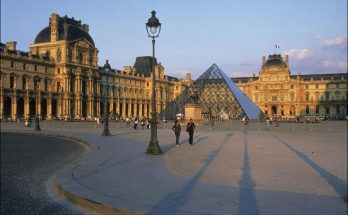
Take a Metro train and head for the Louvre, the biggest museum in the world with 30,000 exhibits. You could easily spend a day there and still not get round all of the paintings and statues. Make sure the Mona Lisa – whose smile has beguiled art lovers for centuries – and Venus de Milo are top of your list. Both draw big crowds.

Evening

ALL that culture will leave you feeling hungry and a great place to satisfy your food craving is Chez Chartier at no 7 Rue de Faubourg. The French flock to this banqueting hall for its great-value cuisine and atmosphere.

For just pounds 10, you can have three courses (such as French sausage, roast pork with Lyonnaise potatoes and creme de marron) with half a bottle of wine.

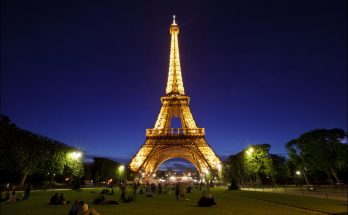
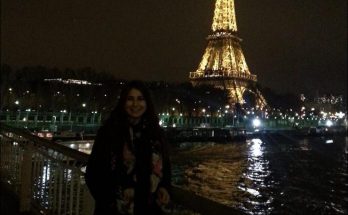
Huge mirrors hang from the walls and waiters in classic black and white outfits attend to your every need. The meal sets you up perfectly for the high point of the weekend – a trip to the Eiffel Tower at night. The 1,000ft masterpiece of Gustav Eiffel, built in 1889, is lit up every evening and from a distance looks like a huge dazzling jewel.

Searchlights revolve around its summit into the Paris night. Entrance to the tower and a lift to the third floor at its peak costs pounds 6.70 – and it is well worth it.

Cast your eyes at the streets below and see the majestic lay-out of central Paris and the Seine.

Every top sight around the city is visible, including the Place des Invalides (a magnificent building for French ex-servicemen), Stade de France (home of national sport) and Longchamp racecourse.

Also take your time exploring the first and second floors of the tower, with their restaurants, gift shops and cinema showing some of the key moments in the tower’s glorious history.

It will all have you humming the Marseillaise and thinking Vive La France!

Source: Travel on Made in Atlantis