Urban Landscapes

Paris: Famous Places as Seen by Great Painters

starry night Paris: Famous Places as Seen by Great Painters

Starry Night over the Rhone, c.1888
Vincent van Gogh
12 in. x 9 in.
Buy This at Allposters.com

Paris is a city where nature has never worn out her welcome, but continues to thrive even in the ultra-modern quarters. The Seine with its shady banks and sunny quays provides a perfect haven of flowers and greenery, while the whole city is dotted with parks and gardens. The Impressionists and after them the Fauves roamed Paris with eager, understanding eyes, recording the tremor of the trees along the avenues, the shimmering surface of the river, old walls glowing in the sun, chimney smoke gathering into wisps of cloud above the rooftops. On monuments mellowed by time the faintest shades of color flicker as if seen across a tenuous veil.

This unique light of Paris, made of sunshine and mist, gives every element its rightful place and tone in the panorama. Even the Eiffel Tower, modern times’ great contribution to the silhouette of Paris, blends with the monuments of the past, a soaring, bodiless piece of architecture giving the full measure of the sky above the city. The best painters of the present day no longer linger over anecdote and detail; their broad synthetic vision embraces the seen and unseen treasures of a city as rich in past glories as it is rich in promise for the future.

The earliest paintings in which we can identify actual views of Paris date from the transitional period from Romanesque to Gothic, when outline drawing was coming back into favor at the expense of the monumental style. Definitely on the way out were the lavish gold backgrounds we find, for example, in the Psalter of St Louis, in which the scenes take place beneath the pinnacles, rose-windows and pointed arches of the SainteChapelle. Manuscript painting moved on from blue-and-red to shadings of color, to lively, freehand drawing, to the checkered backgrounds typical of the Parisian ateliers.

The Life of St Denis, a manuscript written by a monk named Yves and offered in 1317 in three bound folios to Philip the Tall, was illuminated by an unknown artist. The entire legend of St Denis, first bishop of Paris, is illustrated in detail, from the time when, still a pagan, he ranked as one of the leading philosophers of Athens, to the days of his conversion and subsequent mission to Paris where, with his companions St Rusticus and St Eleutherius, he suffered martyrdom on the hill of Montmartre; from there, says the legend, carrying his severed head in his hands, he walked a few miles northward to the village of Catulliacum 10, today called St Denis.

Each scene of the saint’s life is coupled with vignettes which, taken together, give a remarkably complete picture of life in medieval Paris. We see boatmen on the Seine ferrying barrels of wine, and an angler in his boat drifting with the current. At the foot of the towers, beneath the city gates, we see the crowds on the Grand-Pont: money changers, goldsmiths, street porters, jugglers, showmen with bears and monkeys, beggars, rag-pickers, wine-hawkers–an image of everyday life in Paris that was to change little for many centuries to come.

Between these early works and the high achievement of the Limbourgs and Jean Fouquet, what do we find? The great intervening figure is that of Jean Pucelle, leading chef d’atelier of a Paris that even then, in the 14th century, was an international art center, a hive of busy studios where expert draftsmen and illuminators produced a wealth of exquisitely illustrated manuscripts. Pucelle’s finest work is the Belleville Breviary, whose vellum margins he covered with ivy sprigs and foliage, with butterflies, dragon-flies and snails, and a whole fauna of whimsical creatures painted with a finesse and poetic realism that recalls “both the edge of a garden patch and a masterpiece of the engraver’s tool”

Shortly after Pucelle’s death in 1380 (the same year in which Charles V died), there occurred the revolt of the Maillotins 12, during which the furious populace lynched the tax collectors. Even so the city preserved a semblance of good government for the next thirty years, and it was with a heavy heart that the great satirist and ballad writer Eustache Deschamps took leave of Paris and the pleasures she offered:

Adieu m’amour, adieu douces fillettes,
Adieu Grand Pont, hales, étuves, bains,
Adieu Paris, adieu petits pastez!

Deschamps died about 1406. In the coming years Paris endured rioting, epidemics, famine, and an English occupation. But this did not prevent such proud lords of the realm as the dukes of Anjou, Burgundy and Berry, brothers of Charles V, and Louis d’Orléans, his youngest son, from patronizing artists and collecting works of art as passionately as Charles himself had done. Their vast estates, despite the troubled times, were covered with palaces, castles and chapels in which jewels, tapestries, sculptures and paintings from all corners of Western Europe were amassed–collections of incalculable richness as is proved by the inventories of the time. The most famous and memorable of these art-loving princes is the Duke of Berry.

A strong-minded man, avid of novelty and refinements, the Duke of Berry was continually on the move from one of his castles to another, invariably accompanied by his pet swans and pet bears. An insatiable collector of beautiful things and an unrivaled spendthrift, unstinting with artists whose work he admired, and always eager to have his portrait painted by them, he was–for all his faults–wise enough to prefer to live on in the eyes of posterity not as one ruler of a petty realm amongst many such rulers, but as a generous patron of the arts at whose court the good things of life were enjoyed to the full.

It was for him that Pol de Limbourg and his brothers painted about 1416 the incomparably beautiful miniatures known as the Très Riches Heures, now at Chantilly. Views of Paris figure in the background of several scenes contained in this Book of Hours, notably the exquisite illustration of the month of June in the Calendar. Here we see the tip of the Ile de la Cité with, on the right, the Sainte-Chapelle emerging from beyond crenelated walls “like a gigantic reliquary” (Marcel Poète) and symbolizing that successful union of the holy and the worldly life realized by St Louis. This view was made from about where the presentday Mint stands.

Another scene from the Calendar (month of October) shows peasants plowing and sowing in the shadow of the Louvre. So it must have appeared in the heyday of Charles V, when the king, abandoning the Palace where ghostly memories of the recent murders perpetrated there by Etienne Marcel and his cohorts gave him no peace, took up his residence at the Louvre, a magnificent chaos of battlemented towers, pointed turrets and steeply pitched roofs covered with sheet lead or glazed tiles, and topped with tall weather-vanes, finials, gables and so on.

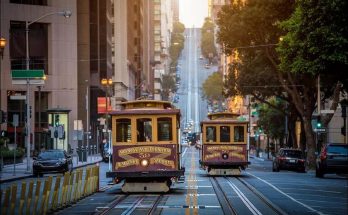
California Dreaming Art Print

california art print California Dreaming Art Print

California Dreaming Art Print
Tyler Burke
39 in. x 20 in.
Buy This at Allposters.com

california dreaming poster, california posters, california art prints, urban landscapes, travel posters, american travel posters

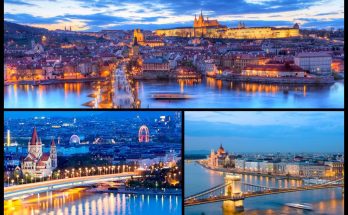
Venice: Italian Love Story Art Print

italian love story Venice: Italian Love Story Art Print

Italian Love Story
James Lee
24 in. x 36 in.
Buy This at Allposters.com

venice posters, venice art prints, urban landscapes, italian travel posters, italy travel posters, italy travel, italian love story art print

Illuminations in St. Petersburg Art Print

illuminations in st petersburg Illuminations in St. Petersburg Art Print

Illuminations in St. Petersburg, 1869
Fedor Aleksandrovich Vasiliev
12 in. x 9 in.
Buy This Allposters.com

st petersburg posters, st petersburg art prints, russia posters, russia art prints, urban landscapes, travel posters, travel art prints, russian art posters, russian travel posters

Moscow: Don’t Leave Without Doing These

N4TEG00Z Moscow: Dont Leave Without Doing These

Moscow Vintage
Robin Jules
16 in. x 20 in.
Buy This Allposters.com

Must-see attractions are the Pushkin Museum, where the Trojan treasures are exhibited, Tretyakov Gallery, as exhilarating as the Pushkin Museum, the Kremlin Palace, the icon of power and the notable Red Square, just in front of the Palace.

Enjoying caviar and vodka

Named after sturgeon fish, caviar assotrtments are the primary delight of Moscow. Of course, the presentation of caviar is as important as the quality. The very match of caviar, presented on crystal plates filled with ice, is definitely vodka.

How would you prefer your vodka?

The Russian order Vodka as a perfect match of Zakuski, a spicy and salty appetizer. And vodka assortment is huge: the sweetie Stolichna, sparkling Kovskkaya, lemon Limonnaya, red-pepper flavored Pertssovka and Ohotniçya, as a breeze of juniper, ginger and clave.

Moscow: The city of millionaires

moscow st basils Moscow: The city of millionaires

St. Basils, Moscow, Russia
Demetrio Carrasco
9 in. x 12 in.
Buy This Allposters.com

Once a small village in the 12th century, Moscow today boasts its position amongst the largest cities of Europe and -of course- its 850-year-long history. Contrary to common belief, it is neither rather misty and foggy nor cold and bleak. Illuminated structures, avenues with luxury stores and buildings reminiscent of dreamlands are the very proof of this.

“If I invaded Kiev, it means I have conquered Russia’s feet. If I invade St. Petersburg, it means I conquered Russia’s head. However, a Moscow invasion means that I have conquered Russia’s heart.” This quote from Napoleon Bonaparte, revels secrets about Moscow.

Ranking amongst the 10 largest cities of the world, NMoscow enjoys its favorable position between Oka and Volga rivers. With the number of millionaries markedly higher than other cities, Moscow has granted the fame: The city of millionaries.

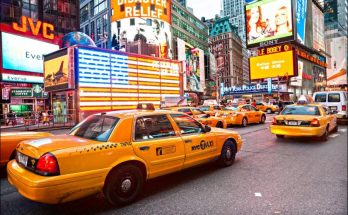
Destination No. 1 Times Square, New York City

times square poster Destination No. 1 Times Square, New York City

New York Times Square

36 in. x 24 in.
Buy This Allposters.com

Annual Visitors: 39,200,000

Tourists flock to New York’s neon heart for the flashing lights, Broadway shows, megastores, and sheer spectacle. Pedestrian-only areas with café tables introduced in 2009 have only made it easier and more appealing to hang out here. Times Square can even be a convenient, if chaotic, base, thanks to hotels at every price point and easy access to public transportation: subways, rails, buses, and more yellow taxis than you can count.

Destination No. 2 Central Park, New York City

central park new york Destination No. 2 Central Park, New York City

NYC, Central Park Snow and Plaza Hotel
Rudi Von Briel
16 in. x 12 in.
Buy This Allposters.com

Annual Visitors: 38,000,000

New York has larger green spaces, but none is more famous than Central Park, which stretches across nearly 850 acres of prime Manhattan real estate—an oasis for both tourists and locals. You can ride in one of the famous horse-drawn carriages; check out the modest-size zoo; climb to the top of 19th-century Belvedere Castle; or take a break from pounding the pavement to sprawl on the Great Lawn, gazing at the skyscrapers above.

Communist era habits at Hvar Island in Croatia

hvar island croatia Communist era habits at Hvar Island in Croatia

Hvar Island, Croatia Photographic Print
Peter Adams
16 in. x 12 in.
Buy This Allposters.com

I had reached Capri by a circuitous route, driving down the coast of the former Yugoslavia before taking a car ferry across the Adriatic to Italy. My intention was to see what the war between Serbs and Croats had done to the famous Dalmatian coast and, in particular, to a favorite island, Hvar (pronounced ‘var).

The start of this drive had been anticlimactic. Instead of the war-torn country I was braced for, everything along the coastal highway was operating normally, the ferries were running on time, and the hotels were brightly lit and in good repair. The only difference from my visit in 1989 was the almost complete absence of tourists, but that I was very happy to live with. (The Dalmatian coast is Germany’s and Austria’s easiest access to the Mediterranean, and in a normal summer it is hit by a blitzkrieg of family vacationers.) It was only later, while taking a shortcut inland from Zadar, that I found myself driving through miles of devastation, with village after village systematically destroyed.

The islands of the Dalmatian coast are the most architecturally beautiful in the world. In the fourteenth and fifteenth centuries, the warring between Venice and Ragusa (Dubrovnik) left a legacy of handsome fortified cities built of honey-colored stone, of which Hvar’s is the finest. It is fashioned around an enormous piazza, a Baroque cathedral at one end, a small-boat harbor at the other, and is flanked by Gothic Venetian palaces. Occupying one corner is a building known as the Arsenal: It is topped by a theater that was built in 1612, when Shakespeare was still alive, and is claimed to be the oldest public theater in Europe.

Along with other islands of the Dalmatian coast, Hvar was untouched by the war, except for being used to house refugees. At one time, there were twelve thousand of them, many from the most brutal areas of “ethnic cleansing”: Mostar and Vukovar. Being mostly Muslim peasants, few adapted to island life, and almost all left at the earliest opportunity. Apart from harvesting the lavender crop, grown on the east side of the island, there was no agricultural work for them todo on Hvar.

In trying to reestablish its tourist trade, Hvar, along with the rest of the former Yugoslavia, finds itself in an unfamiliar position. While other Eastern European nations have spent the last seven years slowly adapting to the needs of sophisticated Western travelers, Croatia and Serbia have, because of the war, been standing still. There was a time when, in tourism terms, Yugoslavia was the most Westernized of the Communist nations-but no more. It was a shock to revisit Hvar and find so many of the old Communist-era habits still in place: waiters staring at their shoes as you try to get their attention; officious managers directing you unapologetically to the worst table or the worst room in the house; charmless staff who do not even offer a good morning, let alone help with your bags; and doormen who look amazed when you ask for an umbrella in the pouring rain. I noted all of those things in Hvar’s four-star Palace Hotel. Nothing was any worse than it had been on my previous visit, but seven years have passed and expectations have changed. The most frustrating thing is that the Palace, beautifully sited between harbor and piazza, behind an exq uisi te sixteenthcentury loggia, has the potential to be one of the prettiest small hotels in Europe.

woman tourist in hvar croatia Communist era habits at Hvar Island in Croatia

Woman walking in narrow cobblestone alley, Stari Grad Town, Hvar Island, Dalmatia, Croatia
John & Lisa
18 in. x 24 in.
Buy This Allposters.com

Now that the war is over, will a change of attitudes come? I was alarmed to learn that Hvar’s ten hotels, including the Palace, have been merged into a single company that is more than fifty percent bank-owned and thirty-eight percent worker-controlled-s-not, on the face of it, a formula for sophisticated new thinking. The most hopeful signs are in the little restaurants of the old town, which are energetically run by eager yo ung entrepreneurs. One wai ter searched for me all over town to return a guidebook I had accidentally left behind.

Hvar is still one of my favorite islands-with its Venetian piazza and lavenderscented hills, it is too beautiful not to be-but I am looking forward to the day when a new generation takes over from those old Palace timeservers.

Vernacular architecture, the high architecture of Hvar, is what most islands are about. And because of the cultural isolation, the constraints on available materials, and the ingenious solutions required by the need to relate to the sea, island architecture is an especially rich vein of folk art.

Greece, of course, has the most instantly recognizable vernacular architecture: not only the white-cube style of the Cyclades, so beloved oftourist posters, but the jaunty red pantiles of northern Greece and the neoclassical pediments of the Dodecanese.

Despite their touristy ambience, Santorini and Mykonos have the two supreme white-cube towns, and nobody can deny that, of the two, Santorini’s has the more dramatic situation, clinging a thousand feet up to the precipitous lip of a sunken volcano. It makes a perfect cruise-ship stop, and the view is a must for first-time visitors; but for me, that is where the attraction ends. Santorini’s town, so pristine and . peaceful from a distance, is unexpectedly tacky at close quarters. The treadmill of backpackers and sightseers arriving briefly to register the view before squeezing onto the narrow black sand beach gives it a feeling more of a transit camp than of a lazy Greek island. Mykonos, too, suffers from an excess of visitors, but it manages to receive them with a sense of style and chic that has been lost on most other major tourist islands. On my trips to Greece, I always enjoy spending a few civilized days on Mykonos, but “Been there, done that” is my normal response to Santorini.

Continue Reading >>

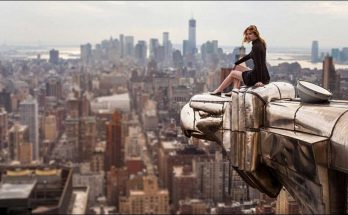
New York City at Night Artwork Poster Print

new york skyscrapers poster print p2283574077767901647g1w 500 New York City at Night Artwork Poster Print
New York Skyscrapers Poster Print by made_in_atlantis

The Battery, Central Park, the Empire State Building, Metropolitan Museum of Art, Museum of Natural History, Museum of the City of New York, New York Public Library, Radio City, Wall St., and many others.

If those who originally planned the streets of New York had possessed enough imagination to foresee the down-town habit of the present day, no doubt they would have arranged matters differently. They fancied that the city would be a great shipping center, a seaport; and that people would need many streets running toward the water on either side. Moreover, the long backbone of Manhattan, being high ground from which there was a general slope away toward the rivers, must have suggested that the natural drainage and sewerage of the city would be along the many ribs or streets running east and west. No one thought then that in a comparatively few years half the population would, morning and evening, be moving along the ridge of the island, crowding, clutching, struggling with one another, like so many ants traveling along the narrow top of a fence rail.