Tourism and travel guide about destinations, attractions, tips, activities.
May 10th, 2009 traveler
The Seven Wonders of the World Of Antiquity:
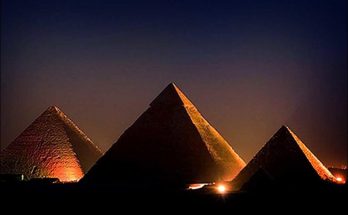
(1) The Pyramids of Egypt.
(2) The Gardens of Semiramis at Babylon.
(3) The statue of Zeus at Olympia, the work of Phidias.
(4) The Temple of Diana at Ephesus.
(5) The Mausoleum at Halicarnassus.
(6) The Colossus at Rhodes.
(7) The Pharos of Egypt, the Walls of Babylon or the Palace of Cyrus.
The Seven Wonders of the World Of the Middle Ages:
(1) The Coliseum of Rome.
(2) The Catacombs of Alexandria.
(3) The Great Wall of China.
(4) Stonehenge.
(5) The Leaning Tower of Pisa.
(6) The Porcelain Tower of Nankin.
(7) The Mosque of St. Sophia at Constantinople.
The palace of the Escurial has sometimes been called the eighth wonder, a name which has also been given to a number of works of great mechanical ingenuity, such as the dome of Chosroes in Madain, St. Peter’s of Rome, the Menai suspension bridge, the Eddystone lighthouse, the Suez Canal, the railway over Mont Cenis, the Atlantic cable, etc.
Posted in Africa, Asia, Egypt and Pyramides, Europe, Italy, Middle East, Rome | No Comments »
March 21st, 2009 traveler
The Nile Valley Egypt
For most of its 750-mile length from the Egypt-Sudan boundary to the head of the delta, about 10 miles north of Cairo, the shining snake of the half-mile wide Nile coils itself back and forth in a valley ten to twenty times its own breadth, though as wide as fourteen miles in some spots and as narrow as two hundred yards south of Aswan. The river tends to hug the eastern edge of the valley floor, but it loops and meanders back and forth and narrow bands of cultivation are almost continuous on both aides. The level-floored groove of the Nile is enclosed by scarps rising as much as 1500 feet above the river, higher toward the Sudan, lower towards. Cairo; eastward and westward from the valley stretch great uninhabited plateaus.
To an airborne traveler, no contrast could be more vivid than that between the lifeless deserts and the green and fertile ribbon they enclose; “nowhere in the world is the contrast between the desert and the sown more dramatic, or the transition from solitary waste to teeming valley so sharp.” Within the valley every available square inch is irrigated and cultivated; the villages and other habitations (mostly fashioned of grey Nile mud) huddle along the useless desert fringe or perch on bits of high ground afforded by the natural levees beside the river. Along the shore and in the villages stand useful date and doumpalms and a few isolated eucalyptus, sycamores, flamboyants, whispering tamarisks, acacias, broad-spreading mulberries, and a wide variety of fruit trees, which give color to the landscape and a modicum of protection from the rays of the sun, bearing down through a cloudless sky. The river itself is alive with traffic of every variety: small sailboats ferrying people from shore to shore or from village to village, larger craft and tugs and barges moving slowly upstream (with the wind) or floating their cargoes down to Cairo.
Physiographically the valley is divided into five sections, each characterized by certain distinctive features with respect to its borders, its width, and the nature and extent of its flood plain. From south to north these are: the Nubian valley south of Aswan, the Aswan-Isna section, the Isna-Nag’ Hammadi section, the Nile ravine between Nag’ Hammadi and Asyut, and the Asyut-Cairo section.
Posted in Africa, Egypt and Pyramides, Middle East | No Comments »
March 21st, 2009 traveler
Four major physiographic divisions are recognized in Egypt – the Eastern Desert, the Western Desert, Sinai, and the Nile Valley and Delta. In human terms, these reduce to two: the deserts (including Sinai) are large and empty; the Nile lands are small and crowded. The Valley and the Delta together comprise only three per cent of the total land area of Egypt, but within their 12, 355 square miles (32, 000 sq. km.) – about the size of Maryland and Delaware combined – live about 95 per cent of Egypt’s 80 million people.
None of these broad divisions are completely uniform or homogeneous; each contains subregions with differing geological histories, climates, soils, land use patterns, or other cultural features. For example, the Red Sea mountains must be sharply distinguished from the rest of the Eastern Desert; Sinai’s southern mountains, central plateau, and Mediterranean coastal plain are all different from each other and from the Suez Canal Zone along the western border of Sinai.
Most significant are the differences between the Nile Valley and the Delta. Notwithstanding their common dependence on the river and their generally similar crop patterns and methods of cultivation, these two regions have unlike physiographies, irrigation and drainage problems, and culture histories.
Posted in Africa, Egypt and Pyramides, Middle East | No Comments »
March 21st, 2009 traveler
Turkish cuisine is a combination of Middle Eastern food (kebabs, pitta bread and houmous) and Mediterranean food, (tomatoes, garlic, grilled meat, and olive oil). Hot peppers, herbs (cumin, mint, parsley, dill) and yoghurt are important ingredients in Turkish cuisine. Bread is part of the Turkish daily diet.
A “meze” consisting of a number of small dishes may be served before the main course of a meal. These include slices of melon, feta cheese, pickles, nuts and small portions of vegetables, fish, and salads.
Soups (fish, rice, lentil), rice and wheat dishes (pilaf), meats (lamb, mutton, veal, poultry) and seafood (anchovies, sardines, mackerel, octopus, mussels) are prepared with vegetables (aubergines, artichokes, chick peas, beans, beetroot, chard, cucumbers, mushrooms, onions, peppers, spinach, tomatoes). Stuffed vegetables (sarma and dolma), egg dishes and meatballs are popular. The kebab, marinated lamb roasted on a spit, is a Turkish favourite.
Milk puddings flavoured with orange, lemon or rose water are a popular dessert. Other desserts include fresh and stewed fruit (apples, apricots, cherries, figs, melons, peaches, pears, plums, quince, strawberries and tangerines), pastries and sweets such as Turkish Delight and halva.
Raki, an anise flavoured spirit, is the national drink. “Boza”, another traditional alcoholic drink is made from fermented wheat berries. Beer, wines and fruit juices are produced. “Turkish” coffee is thick and black and tea is prepared over boiling water and served in small glasses.
Posted in Europe, Middle East | No Comments »
March 16th, 2009 traveler
The Narthex
The Narthex of St. Sophia is divided into vine bays with quadripartite vaults. Each bay gives access to the interior of the Museum, which thus may be entered through the great central portal and through the four lesser openings to the North and four to the South of it.
Above the marble facing of the walls extends a frieze of opus sectile (height, 0·47 m.) which is separated from the mosaic lunettes and vaults by a vine moulding of stucco. The length of a unit of the mould is 0·87 m. The frieze had by the nineteenth century fallen into a state of such dilapidation that the Fossati covered it with a copy of its design in paint, but it is possible to regain certain lengths of it intact.
The Mosaics
THE mosaics throughout the Narthex largely owe their preservation to the skilful work of Gaspare and Giuseppe Fossati, who between the years 1847 and 1849 were engaged at the command of the Sultan Abdulmecid in the task of renovating the Mosque and preserving the mosaics. Under their supervision the mosaics of the Narthex which cover the panels of the vaulted ceiling, the soffits of the arches, the lunettes over the doors leading into the Museum, the crenellated borders which trace the ribs, and the acanthus scrolls which frame the windows, were all re-established. Where disintegration was evident, plaster was introduced to fill the holes left by fallen tessellae and spread to grip those still in place, and sometimes even metal wing cramps and nails, regrettably of iron, were employed hastily, in order to effect local strengthening.
The golden ground of the mosaics of the ceiling and the geometric patterns and floriated designs which cover it and its component members were by this method consolidated and conserved without restoration. Missing parts of designs were frankly copied in paint and lee to view, but no restorations, in the sense of stripping off old mosaics and resetting them, or of introducing new ones, were attempted.
When these architects came to treat the mosaics in the lunettes and soffits A to I, in addition to the work of examination and reinforcement, they submitted the Byzantine representation in the central Lunette E, over the Royal Entrance, as well as the mosaic crosses in the eight other lunettes and in the soffits, to a covering of paint or of gold leaf, and by this means they partly concealed the work of the Byzantine artists.
The painters employed to draw the veil merely chose for the theme of their cumin Byzantine patterns from the mosaics of the vaulting of the Narthex close above their heads and copied them. The execution of this operation was of a very perfunctory character in stencil. No original design was introduced by them into the Narthex; and when during 1932 the surfaces were freed from the extraneous oil-painting, no Turkish work, and no ancient work, and no work of any merit whatever was destroyed. Sketches made by Major Cornelius Loos as late as 1710 show that the crosses were freely exposed at that time. It would thus seem that no screening of the Byzantine decoration in the Narthex had occurred up to the eighteenth century; nor are there traces of any earlier covering than that of the Fossati.
The mosaic work as fortified by the Fossati, both that in the areas beneath their painting and the large open tracts of gold background, was found generally to be well preserved. Investigation proved that the original composition of lime and powdered marble which was used to embed the Justinian mosaics varied throughout the Narthex. New batches of the mixture had been constantly made, and sometimes, perhaps, in careless haste. The blend used in Lunette D may have been faulty in its proportions; it yielded, at least, a weaker bed, which consequently showed some degeneration.
The gold ground was not covered as were the crosses. The paint covering the crosses varied in depth and strength. It was more solid and hence more difficult to remove in some lunettes than in the others. Nowhere, as in the Great Mosque at Damascus, was there a covering of plaster which could be cut off in strips. Neverthdess, in the work of removing from the mosaics the disfigurement of the paint it has not been found necessary to use solvents of any kind; the cleaning of the original mosaics has been accomplished by simple and innocuous mechanical means. The thin paint covering me mosaics is particularly amenable to flaking and was carefully removed tessella by tessella by means of a small steel chisel, such as has been used in delicately cleaning fossils and in scraping oil varnish and over painting from pictures. The liberation has been confined to the erasure of the paint; it was considered wiser not to disturb the plaster introduced by the Fossati into the interstices between the cubes, for it strengthens the decorations without defacing them seriously.
Still, surprisingly little of the original mosaic in the Narthex has been lost in the course of centuries.
The Frieze of Opus Sectile
The frieze of opus sectile constitutes a ribbon border formed of three longitudinal bands. These bands, of which the central one is wider than the upper and lower mutually similar ones, are edged by four plain, marble creases. The upper and lower creases are yellow and rosy in colour; the two creases framing middle band of the frieze are white.
The designs on the three bands of the frieze are of unequal force. The effect of the central band predominates over that of the upper and lower ancillary zones, each of which repeats a simple theme. This consists of a restrained, undulating figure produced by a series of loosely flowing M’s, presented alternately uptight and reversed.
Posted in Europe, Middle East | No Comments »
June 24th, 2008 traveler
This remoti, largely mountainous region is the home of some of the most fascinating sights in Turkey. Near Dogubeyazit is Mount Agri (Ararat) where Noah’s Ark is said to have landed (althought the Koran differs here, quoting Mount Cudi south Lake Van). Nearby is the 17th century walled palace of Ishak Pasha, wiht is intricately carved stonework.
Lake Van, almost an inland sea, is the setting for the monnumental Seljuk cemetery of Ahlat, the 10th century Church of the Holy Cross on Akdamar Island, and an Urartu citadel.
In the torrid basin of the Dicle (Tigris) and Firat (Euphrates) rivers are the cities of Diyarbakir with its magnificent black basalty city walls. Mardin with its unique white stone architecture, and Sanliurfa with its pool of sacred fish. Abraham is believed to have lived for several years at Harran, known for its strange conical dwellings.
The summit of Mount Nemrut in Adiyaman is the site for colossal stone heads, erected by King Antiochus I of the Commagene in the first century B.C. They stare immutably out over the serried peaks of the eastern Taurus, a sight particularly spectacular at sunrise.
Posted in Europe, Middle East | No Comments »
June 21st, 2008 traveler

Americans of today have become the world’s wanderers. The character depicted in Sue’s great novel has its modern counterpart, not only throughout the United States, but all over the globe, with baggage marked “From America,” and destination everywhere. Another human wave flows from city to sea and mountain with the approach of summer, and crowds every outgoing ship bound for the Old World. This national restlessness has aided in coining such words as “commuter” and “suburbanite,” for the daily movement in and out of the great cities of the country is partly the result of the desire “to go somewhere.”
The passing of the multitude to and fro has created the business of travel and developed it into a mechanism which is wonderful in its movements, considering the comparatively short period of its existence. It devises ways and means for all classes and to suit all purses. By it the wealthy man secures his private car, in which to flee from the grasp of the frost king to the shade of palmetto and pine. It provides the clerk with his half seat in the common coach, or conducts the hundred or thousand in the excursion party through the highway of Europe, or around the world. In 1841 that 600 people were taken from Leicester to Loughborough on the first excursion train on record.
It is worth while to turn a few pages of British history, for here originated the system that has since spread throughout the New World as well as the Old. Until the printer, Cook, took his townsfolk to the Father Matthew meeting at Loughborough the excursion train was unknown. The talk it created set people to thinking, and from this obscure village developed the idea of modern travel. Up to that time intercourse between the countries of the Kingdom was confined principally to visits among one’s relatives, the trips of the commercial agents and government representatives. The railroads terminated south of the Scotch borderland; the traveler to the North Country had his choice of stage coach or steamer from the end of the track. To the average Englishman, both Scotland and Wales were almost unknown countries. Popular travel produced a revolution which converted Highland and Lowland alike into a summer holiday encampment for the people of the middle and southern England. It built hotels on hillside and in valley, and bordered the seacoast with season resorts. The throng of pleasure-seekers spread throughout North Wales as well, and even into Ireland. In spite of the present attraction of English tourists to the Continent and the United States, it is estimated that the yearly “bank holidays” find 200,000 Londoners alone transferring their homes temporarily to the Land of Burns and the Bard of Snowden.
The few miles across the English Channel, until 1856, had barred all but the nobility and wealthier British people from visiting the Continent for pleasure, and the comparative few who ventured through northern or southern Europe were considered by the hotelkeepers as their legitimate prey, and compelled to pay exorbitant prices in city and hamlet alike; perhaps mine host had in mind traditions of former days when the earl or duke, with his retinue, rode from town to town demanding the best the inn afforded, and expecting nothing out of the purse of gold thrown down in payment. But with the advent of the tourist agent came a change which benefited host and guest alike, for what was lost in the reduction of charges was made up in the increased patronage.
Another exposition—that in Paris in 1867—caused the tour promoters of the Old World to think of crossing the Atlantic. A few trips to such resorts as Niagara and Saratoga had been arranged by Americans, but the business of travel, as conducted abroad, was practically unknown.
Less than a thousand people went to the other side as a result of the reduced steamship rates and other inducements; but those who attended the great fair returned to become personal advertisements of the modern idea. The average American who had gone abroad previously was possessed of a bank account which could withstand the heavy inroads of the foreign landlords; but few cared to repeat a journey which was attended with such discomfort. Thanks to the tourist agent, the visitors to Paris were relieved of much of the trouble with which those who had gone before them were afflicted. The fortunate combination of scenery and history possessed by the Old World has always been enticing, and the public was ready to welcome any assistance in smoothing the way to reach it. Consequently it is not strange that each year, with a few exceptions, since the sixties has witnessed a steadily increasing exodus to the other side, and the trip to Europe, once considered the epoch of a lifetime, has become an ordinary event—to be regarded of as little moment as the journey between city and city.
The modern system of travel has planned its every detail with admirable nicety. Enter one of the offices to be found in the important cities, and tell the man behind the desk of your proposed journey. In exchange for the check or bank bills, he gives you a piece of pasteboard which will carry you by railroad and steamer to every city in the civilized world, if you so desire. Another package of pasteboard slips pays for food and shelter wherever you may desire it, in the heart of London or on the shore of the Nile. Europe or around the world, as you choose.
If one wants a special car in which to cross the continent, over the wires goes a message, and in an hour it may be linked to a train on its way to meet the tourist, or bearing him on his journey, provided with chef and porter, supplied with food and bedding— turned into a traveling home, in which he can live a week or month, as his purse allows. At a day’s notice a special train can be provided—a hotel on wheels with its bedrooms, library, dining-room, boudoir, and even barber shop. And in the same office where the millionaire engages his “special” the clerk with his month’s vacation secures his bunk or railroad excursion ticket, and pays for his daily meals and lodging.
The modern agency for our pleasure is ubiquitous in every sense of the word. It has developed into an encyclopedia of geography and history so complete that any of its representatives can not only give the location of a particular point of interest, but advise the best land and sea routes to be taken to reach it, and the hour of arrival and departure of train or steamer. The upto-date agency has men, who speak every modern language, stationed in all the important foreign communities to answer inquiries as well as to sell tickets. At these offices the stranger can write and mail his letters, have his mail forwarded to him, obtain information as to the best hotels, be directed to the most reliable shops, have his money and jewelry cared for while in the city, and perhaps get a glance at the home newspapers. After a few weeks abroad he soon comes to look upon these agencies as links which connect him with the far away home land, and he notes their signs with a feeling of gratitude—here is something which is not entirely foreign. In some countries where the native hotels are not satisfactory the tourist company has built hostelries of its own. Banking departments, where the American dollar or the English pound can be exchanged Euro, form another branch of the business that is welcomed, as is shown by the report of one concern which in a year changed half a million in American cash for its patrons.
The machinery of travel, too, has smoothed the path of the modern wanderer in more than one sense. It has built ways of stone and steel to enable him to reach some attraction of nature hitherto almost inaccessible The cable car with its uniformed conductors ascends the lava-lined sides of Vesuvius, and you can dine at a restaurant nearly on the brink of the smoking crater. The hum of the trolley is heard among the palms of Egypt, in sight of the tombs of the Pharaohs. The visitor in New England fans himself in the summer heat at the foot of Mount Washington, and a half hour later buttons his overcoat around his throat as he alights from the car in the region of winter on its summit. The “cog-wheel” route up Pike’s Peak has divested it of some of its fascination—for danger is often tempting—but it is far more comfortable to rise above the clouds seated in a cushioned chair than plod along the rocky road, the day’s journey required, afoot or ahorse.
Traversing a part of Florida is a railroad originally called the “Millionaire Line,” because a millionaire constructed it, and men of millions reached the American Riviera by it. Five hundred miles in length, it was built solely in the interest of the tourist at a cost of over five millions of dollars. But its promoter had the satisfaction of knowing that it revolutionized the mode of reaching the land beyond the frost line and acquainted the American people with a region which before had been almost as unknown as the wilds of Africa. The company’s yearly earnings prove that its enterprise was not unprofitable, for it has gradually changed into a highway, for the masses as well as the classes.
Nature’s attractions as an inducement to the seeker for variety. With the beginning of each season those remarkable people, the modern passenger agents—vie with each other in the production of pamphlets, even books of generous size, profusely illustrated in various colors. Ten thousand, perhaps a hundred thousand, of a single issue may be scattered over the country in the time-table racks. The preparation of railroad and steamboat literature has become an important part of the machinery of the passenger department—principally to secure the interest of the tourist.
But remarkable as has been the activity of railroad managers in the promotion of the tourist movement, the gaze must be turned seaward to fully appreciate its present dimensions. In a single month of spring or early summer fifty steamships leave New York alone. On a Saturday, a procession of ten great liners may be seen wending their way through “The Narrows.” As the purser records tickets from “upper deck” to steerage, he expects to find at least ninetenths having tourist transportation; for the Italian fruit vendor, who has saved enough to visit the old home once more, realizes the advantages of the system as well as the banker who engages his suite of cabins.
The tourist agent and the transportation company have provided all of these facilities naturally for their own profit, but in so doing they have been benefactors. The opportunity for education by travel has been placed within reach of a multitude of Anglo-Saxons who could not avail themselves of it otherwise. The Briton has gained knowledge of America and Americans, and the American has gained a knowledge of Great Britain and the Britons which could not be obtained in a life-time study of history. The personal contact with not only the people but the manners and customs of the Old World has broadened the tourist from this side to a deeper appreciation of his own land. He has also acquired a fund of information not to be found within the book covers, which is beyond price, for the eye and ear note a thousand sights and sounds daily, which combine to make a most valuable history.
Posted in Europe, Middle East, Tourism News, Tropical Regions, United States | 1 Comment »