May 10th, 2009 traveler
FESTIVAL INTERNATIONAL DE JAZZ DE MONTREAL
(June 26 – July 6)
With over 400 concerts, 300 free shows in the heart of the city, four city blocks are closed to traffic to make way for this enormous musical celebration. We’re bringing together close to 2,000 musicians, from over 20 countries to entertain some 1.5 million people in what is hailed as one of the most important jazz events in the world.
With its friendly atmosphere and finely tuned organization, this is a singular event that can only be experienced in Montreal.
It’s easy to see why so many critics and musicians alike have named it as their favorite festival in the world.
Montreal’s festival is the best in the world.
Posted in Canada, Montreal | No Comments »
March 23rd, 2009 traveler
As in the Maritime Provinces, it has been shown that there are three main levels of peneplanation in Quebec. The lowest, called the Quebec Platform lies in the St. Lawrence Lowlands. It was fashioned by the pre-glacial network of rivers. It is well developed around Montreal, being some 70 miles in width between the Laurentian plateau and the Appalachians. It is very low, ranging from 100′ to less than 300′ above sea level. Towards Quebec City, the platform is narrower and seems to be pinched between the edge of the Canadian Shield and the Appalachians. The Upper City is built on a fragment of that platform about 300 feet high. It is thought to be a Pliocene peneplain, achieved toward the end of the Tertiary Era. This erosion level is also found along the Ottawa River as far as Hull, along the South shore of the Estuary, as far as Matane, and along the Baie de Chaleur. The best farmlands were first settled on this peneplain, and its low relief is favourable to transportation.
The second level of erosion is the Appalachian Platform. Its altitude varies from about 700 to 1,300 feet. It is evident in the fairly uniform level in Gaspé peninsula except in the central part, on the South Shore of the Estuary, above the escarpment facing the shoreline, and is widespread in the Eastern Townships except for the summits of ranges. The same platform exists on a much larger scale in the Laurentian Upland. The peneplain was carved during the Miocene and Oligocene periods. Much of it is still covered with forest, but some parts are settled, as in the Eastern Townships, in Central Laurentians, in Western Quebec and elsewhere.
The third level of erosion, called the Shickshock Platform by Blanchard, rises above 2,000 feet. Only a few fragments of that oldest landform remain. They are located in Central Gaspé, in a few summits in the Eastern Townships, in the Laurentide National Park, around Mont-Tremblant, and within the Canadian Shield, north of the Saguenay. Since it dates back to the Eocene and perhaps even to the Upper Cretaceous Period, it is found in most places to be a dissected and broken country, as in the Shickshocks and in the Laurentide Park. But the skyline is nevertheless fairly level. These wooded hills and plateaus have, for the most part, been set aside as forest preserves.
Drainage
The whole area of Quebec is drained, either directly or indirectly into the Atlantic Ocean. There are two main watersheds: (a) The St. Lawrence River and Gulf, and (b) Hudson Bay. The former is the most important on account of its location in the settled part of the Province.
Posted in Canada | No Comments »
March 23rd, 2009 traveler
The more numerous and the largest tributaries are those of the left or north bank of the St. Lawrence, draining a wide area of the Laurentian Plateau. No less than 17 rivers exceed 100 miles in length, the longest being the Ottawa River (685 miles), a large section of which forms the boundary between Ontario and Quebec. One trait is common to all; the drainage is hesitant at the source but the flow of water becomes swifter and swifter as their courses cross the edge of the Plateau in the Laurentian hills. These are all rejuvenated rivers, developing new valley profiles amongst glacial deposits, and supplying abundant water power.
A few of these rivers will be described in detail.
The Ottawa River
Its source is to be found nearly 1,200 feet above the sea level, back of Lake Barrière dam located at Longitude 76° 45′ W. and Latitude 47° 30′ N. The river flows southwestward to Lake Timiskaming (588 feet) and then southeastward to lake TwoMountains (70 feet)where it empties into the St. Lawrence. At Grenville, half-way between Ottawa and Montreal, the Ottawa becomes the second most powerful river of Quebec; the mean annual flow is 67,330 c.f.s., the highest water being 145, 150 c.f.s, in May, the lowest, 42,640 c.f.s in September. Besides many unused tributaries like duMoine River, the Ottawa has three tributaries along which settlement and industry are flourishing: the Gatineau, whose head is impounded back of Mercier dam on Lake Baskatong (600 feet above sea level), has a flow at Paugan Falls (halfway between Maniwaki and Hull) of 12,200 c.f.s, annually (varying from 19,100 in May to 10,000 in September); the Lièvre River, beginning away north of MontLaurier, has about half as much water as the Gatineau; the North River, draining the Central Laurentians northwest of Montreal. The Ottawa River empties into the St. Lawrence around Montreal and Jesus Islands by three channels: to the south by the way of Lake St. Louis and the main channel of the St. Lawrence, to the northwest by the Prairie or Back River, which divides Montreal and Jesus Islands, and by the Mille-Isle River, separating Jesus Island from the mainland. They are two mighty streams; the first one having a mean annual flow of 37,400 c.f.s. (69,800 in May and 25,100 in February), the second, a mean annual flow of 7,000 c.f.s.
The St. Maurice River
The next important tributary on the same bank is the St. Maurice River. In its 300 mile course from the summit of the Laurentian Upland, the river drops from an elevation of 1,325 feet at its source in the Gouin Reservoir to sea level at Three Rivers. At Grand’Mère, 20 miles upstream, the rate of discharge varies from 72,000 c.f.s, in May to 13,400 c.f.s, in February, the annual mean being 25,000 c.f.s. Its main tributaries, the Manuan and Mattawin, are also regulated by dams at their head waters.
The Saguenay River
The most important tributary, next to the Ottawa River, is the Saguenay. It is a short river, 100 miles long, from Lake St. John (322 feet above sea level) to the Estuary. Lake St. John is fed by many streams, the most powerful of which are (clockwise on the map) Ashuapmuchuan River, Mistassini River, Mistassibi River and Peribonka River. Reservoirs are being established on the latter. The Kenogami and Shipsaw rivers are also tributary to the Saguenay. Measured at its very source, at Isle Maligne, the Saguenay has a mean annual rate of discharge of 52,600 c.f.s. (117,200 in May and 22,100 in February and March). That whole amount of water falls to the sea level in the first 30 miles of its course. That explains why industry based on water power is so important there. Another asset of the Saguenay River is the fjord.like stretch between Chicoutimi, Haha Bay and Tadoussac. The splendour of that part culminates in front of Trinity and Eternity capes, where steep cliffs on the southern side of the fjord reach over 1,000 feet above the water.
The North Shore of the Estuary and the Gulf has also a great many tributaries that are not used except for logging purposes: Bersimis River, 249 miles long. Outarde River at Baie Comeau, 240 miles long, flowing 33,860 c.f.s, in May and 4,000 in February, Manikuagan River, 310 miles long, Ste. Marguerite River at Clark City, 130 miles long, Moisie River, 210 miles long, Romaine River, 270 miles long, and Natashkuan River, 220 miles long.
Tributaries of the right or south bank of the St. Lawrence are shorter and less powerful. They are located nevertheless in much more settled regions and a few ought to be mentioned. The Richelieu River, drains Lake Champlain (95 feet above sea level), into the St. Lawrence at Sorel. It is 70 miles long. Besides being used for navigation, it has the greatest volume among the tributaries of the South bank: 25,810 c.f.s, in May, 5,331 c.f.s, in September, and a mean annual flow of 11,870 c.f.s.
The two main rivers of the Eastern Townships are the St. Francois and Chaudière Rivers. The first one (165 miles long) has its source in the lake of the same name (951 feet above sea level) and flows southwest to Sherbrooke and thence northwest to Drummondville and Lake St. Peter. At Drummondville the rate of discharge is 6,950 c.f.s, annually (22,880 c.f.s, in April, 2,980 c.f.s, in August). The Chaudière River, 120 miles long, heads in Lake Megantic (1,294 feet above sea level), close to the United States border, and flows through Beauce County, where its spring ltoods are to be feared. At Ste. Marie, for instance, low water in February has only a flow of 1,065 c.f.s, while high water has a flow of 13,380 c.f.s, in April; and these are averages for a 25 year period. The bad spring flood of 1934, showed a catastrophic range from 587 c.f.s, in February to 22,700 c.f.s, in April.
Posted in Canada | No Comments »
March 23rd, 2009 traveler
THE QUEEN ELIZABETH
For a Unique Experience
Treat yourself like royalty at the regal 4 diamond Queen Elizabeth Hotel which is located right in the heart of Montreal, and conveniently connected underground to over 20 miles of boutiques, the train station, subway and the famous Molson Centre.
Delight yourself in any of three restaurants including the famous 5 star Beaver Club.
Stay fit in an extensive health club including an indoor pool.
900 Rene-Lovesque Blvd. West Montreal, Quebec H3B 4A5
LE CENTRE SHERATON
Where do love affairs begin?
In the heart, at Le Centre Sheraton. It’s sure to be a magical visit if you stay at Le Centre Sheraton, in the heart of the city. Indulge in a visit to the health club and spa. Pamper yourself with gifts from the nearby boutiques of the shopping district or, escape to the luxury of your room. Indulge yourself with the one you care for, at Le Centre Sheraton.
1201 Rene-Levesque Blvd. West Montreal, Quebec H3B 2L7
HOTEL DU PARC
An Oasis of Affordable Indulgence
Scenically situated at the foot of Mont Royal, Hotel du Parc is surrounded by the galleries, museums, chic shops, trendy bistros and exuberant nightlife of a unique, world class destination. The Hotel features 449 deluxe guest rooms and suites, fine dining restaurant, bar and access to our superb fitness facilities.
3625 av. du Parc
Montreal, Quebec H2X 3P8
RADISSON
Hotel des Gouverneurs
The friendliest Place
In the heart of downtown, Radisson is only steps away from historical Montreal, the Old Port and the Molson Centre. Direct underground access to the metro and near fine boutiques, department stores, and museums. Discover “Tour de Ville”, Montreal’s only panoramic revolving rooftop restaurant. Unwind in the indoor pool, sauna. and health club.
777 University Street
Montreal, Quebec H3C 3Z7
Posted in Canada | No Comments »
July 3rd, 2008 traveler
FASHION AND DESIGN IN MONTREAL
If it’s unusual, exceptional and charming, you’ll find it here. In furnishings and fashion. Seasoned label-watchers will tell you that Montrealers get it right when it comes to putting togetler a look.
Anything goes. And the things that define Montreal can become a few of your favorite things.
No surprise since the city has inspired a legion of local designers and drawn scads of international haute more creations to the boutiques that swell along its boulevards, chic thoroughfares and miles of underground plazas.
You can apply for sales tax rebates when you return home.
BON APPETIT IN MONTREAL
The sentimentalist who comes to dally over cognac in herb scented, rambling seigneurial-style surroundings won’t be disappointed. Here life is not only to be lived, but lived well. And nowhere is this as evident than at the table, which has earned Montreal the title, once again, of gastronomic capital of the world by AAA.
In addition to its vaunted cuisine francaise, there are restaurants, cafes and bistros (in the neighboorhood of 4,000) representing the cuisine of no less than 75 different nationalities. The Casino de Montreal’s restaurants are definitely not to be missed. For superb dining try Nuances, the only casino restaurant on Mobil Travel Guide’s 5-star list.
Posted in Canada | No Comments »
July 3rd, 2008 traveler
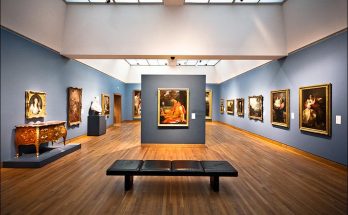
Montreal is home to a variety of museums with specialties ranging from classical history through modem art, religion, sculpture, architecture and even humor.
Montreal Museum of Fine Arts Exiles and Emigres
Site: 1379-80 Sherbrooke Street West
Musee d’art contemporain de Montreal Paterson Ewen
Site: 185 Sainte-Catherine Street West
More than 60 works are offered in this retrospective.
Pointe-a-Calliere, Montreal Museum of Archaeology and History
Site: 350 Place Royale
Recount the history of Montreal from the times of the original native inhabitants to the present.
Canadian Centre For Architecture
Site: 1920 Baile Street
A must for fans of evolving architecture style.
McCord Museum of Canadian History
Site: 690 Sherbrooke Street West
An exploration of 19th century Montreal.
For your open invitation to 19 area museums, get your 1 to 3-day Montreal Museums Pass.
Posted in Canada | No Comments »