Tourism News

Geneva Switzerland Travel Photos Posters Prints

Geneva, Switzerland’s most international city, has 2,000 years of history behind it. Julius Casear was the first to mention it and Clavin preached reform and austerity here in the 16th century; it was the birthplace of Jean-Jacques Rousseau and saw the foundation of the Red Cross in 1864. Geneva is nowheadquarters of over 200 international organiationa and the European HQ of United Nations; as a result it is a polyglot, cosmopolitan city with excellent restaurants, shops and entertainment facilities. The Petit Palais (2 terrase Saint Victor) shows modern art from Renoir to Picasso. The Art and History Museum (11 rue Charles Galland), the Ariana Museum (10 avenue de la Paix), for porcelain and pottery and the Voltaire (25 rue des Delices) and J-J Rousseau (Promenade de Bastions) museums are especially interesting.

There is the annual Fetes de Geneve every August and other exhibitions include one for watches and jewelry in September, and the Auto Show in March.

geneva Geneva Switzerland Travel Photos Posters Prints

Banks, Molard Pier, Ferry Quay General Guisan, Geneva, Switzerland
Buy This Allposters.com

sunset at lake geneva Geneva Switzerland Travel Photos Posters Prints

Sunset on Lake Geneva, 1874
Buy This Allposters.com

What Your Travel Agent Can Do

holidaymaking What Your Travel Agent Can Do

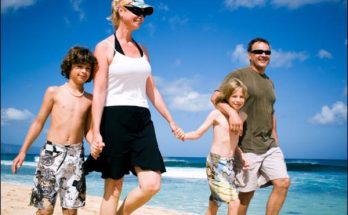
Holiday Thomas Cook Travel Agents, UK, 1950
Buy This Allposters.com

Your travel agent will book your flight and hotel and make arrangements for any additional rail, sea or bus travel. He has a wealth of information on passports, itineraries, reservations, vaccinations and other queries. If you are planning to take an extensive tour it will pay you to discuss it with a travel agent.

Not only will he make sure you get the very best travel bargains for your money, but he will sort out all the arrangements for you in one fell swoop. It can take a full load off your mind while not adding to your budget, because a travel agent’s services cost you nothing. He works for commission from the various transportation operators and travel services that he represents. Apart from financial considerations, using your travel agent will save you enormous amount of time. Give him a call.

Health and Safety Tips for Vacation – Climatic Changes – Be Sure to Insure

Flying is a matter of hours from one climate to another sounds traumatic. In fact, you’ll find it a truly stimulating experience because in the world today much of the sting has been taken out of it. Cold climates cater to visitors with central heating, air conditioning as permeated even the most distant corners of the tropics. Do not forget that in the Southern Hemisphere the seasons are reversed – December in Argentina and Australia, for instance, is mid-summer. As a general rule, the close you get to the equator (which passes through Indonesia and Ecuador) the hotter and more humid the climate becomes. But altitude is also a significant factor – the temperature drops 5 degree for every 5,000 feet of altitiude.

Personal Effects Insurance Policies are well worth the extra few dollars they cost. Among today’s travelers it is the very unlucky and careless who fall among thieves. But if there is a feeling worse than having your luggage stolen – it is not being able to file an insurance claim it for it. And again we stress the value of medical insurance, especially if you have a health problem.

health vacation Health and Safety Tips for Vacation   Climatic Changes   Be Sure to Insure

Vilard de Lans Health Spa Resort
Buy This Allposters.com

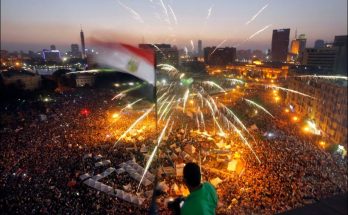
Egypt protesters in world news increases travel risk

sphinx and pyramid at sunset Egypt protesters in world news increases travel risk

Egypt: Sphinx and Pyramid at Sunset
12 in. x 16 in.
Buy This Allposters.com

The Christian Science Monitor reports that tens of thousands of protesters in Egypt braving tear gas and water cannons, were converging on Tahrir Square in central Cairo and protests were taking place across the country. Similar scenes were played out in hundreds of mosques in Cairo, Alexandria, and the gritty industrial towns of the Nile Delta.

As a result the recent protests Canadian department of Foreign Affairs and International Trade has recently updated the travel advisory for Egypt. Canadians traveling to Egypt should exercise a high degree of caution due to occasional demonstrations and protesters, high levels of criminal activity and violence throughout the country, and the threat of terrorist attacks.

According to recent world news reports from Egypt, major demonstrations have been announced and they are likely to be well attended. The week of January 30, 2011 has seen serious civil unrest as a result protesters in many parts of Egypt with reports of large scale arrests, property damage, injuries, and several deaths from injuries sustained during the protests. Access to some areas may be restricted due to increased security measures and police presence on the streets.

Canadians, in particular those visiting or living in urban areas of Egypt, are advised to avoid all demonstrations and large gatherings of protesters and to follow the advice of local authorities. Canadians are advised to exercise caution and restraint, and to avoid unnecessary travel in the later hours of the day and at night.

Will travel insurance cover you while traveling to Egypt?

At this time the Government travel advisory is only a warning and not a recommendation not to travel. Therefore your medical travel insurance policy should cover you when traveling to Egypt on holiday. It is advisable however, to check with your travel insurance provider before traveling to Egypt to see if your policy will be valid based on your specific travel itinerary.

These travel advisories can change at any time, so it is important to check the Government web site before traveling. Your travel insurance policy may cover you, but understand the risks traveling to Egypt due to the current situation.

If you decide to travel to Egypt, do not become a protester, stay away from demonstrations and large gatherings of people, public buildings or other sites which may become the focus of protester demonstrations, such as Tahrir Square in Cairo. You should exercise caution, and observe instructions given by local security authorities and tour operators.

World’s Most Unique Travel Destinations

south sea isles art print Worlds Most Unique Travel Destinations

South Sea Isles Art Print
24 in. x 36 in.
Buy at AllPosters.com
Framed   Mounted

A big part of travel is that feeling you get when experiencing something completely new, something you haven’t seen or done before. Many travel destinations offer an amenity or two that other places don’t–but there are only a few locations in the world that offer a truly unique experience.

Some of these places are wonders of nature–a spot where the flora or fauna can’t be found elsewhere, or where the mountains stretch the landscape to impressive formations. Other destinations are unique because of man-made features–entire islands created out of sand, underwater museums designed to decay, or hotels shaved from ice.

Hot or cold, undeveloped or overly elaborate, these locations offer something you can’t get anywhere else, which is as good a reason as any to plan a trip.

The Azores

Explore the dramatic natural beauty and bounty of crater lakes in this collection of nine volcanic islands in the middle of the North Atlantic. Portuguese by language, it has a culture and cuisine all its own. Feast on the geothermally heated hotpots called cozido das furnas, which consist of mixtures of meats and stews and are a feature of the area near Sao Miguel.

Bhutan

High up in the Himalayan Mountains sits the world’s newest democracy, whose 30-year-old king has been instrumental in developing the country’s parliament, and injecting a democratic voice into Bhutanese affairs. The term “gross national happiness” was coined by the country’s former king, who began the Buddhist country’s path to modernization. It now straddles both the old world and the new, and has earned the nickname, “the last Shangri-La.”

Grindavik, Iceland – The Blue Lagoon

Anne Banas, executive editor of SmarterTravel.com, recommends the stark beauty of the Blue Lagoon in Iceland. “They call it ‘The Land of Fire and Ice’ for a reason,” says Banas. “It’s one of those things that you have to do in a lifetime. You’re swimming in these silica mud waters, but then it’s snowing outside.” Stay at the Blue Lagoon Spa, where you can take a geothermal steam bath, or have drinks while you soak in the lagoon.

Cancun Underwater Museum – Cancun, Mexico

The brainchild of the artist Jason de Caires Taylor, the world’s largest underwater museum features 400 statues by the artist, in a dizzying array of poses and features. The just-opened sculpture park sits in shallow waters in Cancun, allowing snorkellers, swimmers, and scuba divers alike to witness the sculptures grow seaweed and barnacles, and begin to form a supplementary reef for area fish.

Madagascar

Madagascar, sitting approximately 225 miles off the eastern coast of Africa, in the Indian Ocean, is so remote, it’s been host to many one-of-a-kind evolutionary developments. Ninety percent of its native plant life is found nowhere else in the world. “It still feels like a lost wonderland, with unique and diverse plant and animal life,” says Tom Hall, a U.K.-based writer for Lonely Planet.

Classical Greece Tours

sunset in greek islands Classical Greece Tours

Ancient and classical Greece is considered the foundation of Western civilization. His remains are the traveler insight into the classical world, in its architecture, lifestyle and philosophy. Cruises and coach of classical Greece are available, varying in length from one to 11 days.

All Greece

All Greece Travel offers guided tours by bus to the sites most popular classic. From Athens, tours vary in length. A trip to Ancient Corinth takes half a day. Visit Mycenae, with its tomb of Agamemnon and the theater of Epidaurus, is a one-day trip. A seven-day tour covers such sites as Ancient Olympia, Delphi and the ancient kingdom of Macedonia.

Anatolia Tours

Anatolia Tours offers 11-day comprehensive land and sea tour, which includes two classical sites and Greek culture. From Athens, the first visits are in Olympia and Delphi, and from there to the islands of Mykonos and Santorini. The tour includes overnight stays at each destination.

Viator

Viator a bus tour of four days covering the main sites of Epidavros, Mycenae, Olympia, Delphi and Meteora. The kit includes an English speaking guide recovery of selected hotels in Athens and entrances to museums and archaeological sites. Travelers have the choice of tourist class or first class accommodations during the trip.

Belize: A small country for adventure sports and exploring reefs

belize Belize: A small country for adventure sports and exploring reefs

Belize is a small country in Central America. Journey to Belize can include adventure sports, and explore the coral reef of Belize and inland villages. Training and preparation of travel planning tools and Belize care of your health for the trip more enjoyable.

Preparation of health

Training for Travel Belize is to discuss health problems with health care provider four to six weeks before you go. Some vaccines are required for travel Belize. Train for the physical aspects of travel in Belize increasing your level of fitness in the gym or walking and running.

Rainforest

Your Travel Belize can be a trek in the rainforest. Train for the rainforest by learning to use shoes, the best clothes to wear, how to avoid insect bites, and the amount of water to carry and drink.

Language

English is the official language of Belize, but many locals speak Creole of Belize. To learn a little Creole before you travel, you can better understand the local population.

Acclimation

Process of learning about the time you can expect from your trip to Belize and how to deal with it. Belize has a subtropical climate with an annual average humidity of 83 percent. Summer temperatures can reach 96 degrees Fahrenheit, Belize Rainier, cold season from June to November.

Before You Go

Just before leaving for Belize travel, read all the relevant travel warnings and act accordingly. Leave a photocopy of your passport and tickets with a friend, photocopies of essential requirements.

Montreal Jazz Festival – Festival International De Jazz De Montreal

montreal jazz festival Montreal Jazz Festival – Festival International De Jazz De Montreal

(June 26 – July 6)

With over 400 concerts, 300 free shows in the heart of the city, four city blocks are closed to traffic to make way for this enormous musical celebration. We’re bringing together close to 2,000 musicians, from over 20 countries to entertain some 1.5 million people in what is hailed as one of the most important jazz events in the world.

With its friendly atmosphere and finely tuned organization, this is a singular event that can only be experienced in Montreal.

It’s easy to see why so many critics and musicians alike have named it as their favorite festival in the world.

Montreal’s festival is the best in the world.

First existing records of white men in Illinois

The first existing records of white men in Illinois were made by Father Jacques Marquette. On May 17, 1673, he and Louis Jolliet, with five voyageurs, left Mackinac, paddled over parts of Lakes Huron and Michigan into Green Bay, thence up the Fox River, crossed at the portage, and went down the Wisconsin.

On June 17 they entered the Mississippi. On the west side of the river, in what is now Iowa, they encountered and exchanged friendly greetings with the Kaskaskia tribe of Illinois Indians. The adventurers passed the mouth of the Missouri, saw the famous Piasa or Thunder Bird painted on the cliffs near the present city of Alton, and reached the mouths of the Ohio and Arkansas Rivers. There, having determined that the Mississippi flowed not into some western ocean, but into the Gulf of Mexico, and fearing Spaniards and hostile Indians, the Marquette party turned back late in July 1673.

sitting bison postage p172765131837122723anr9r 500 First existing records of white men in Illinois
Sitting Bison by made_in_atlantis
Make custom postage with Zazzle.com

They returned by way of the Illinois River, which Marquette described in his Journal: “We have seen nothing like this river for the fertility of the land, its prairies, woods, wild cattle, stag, deer, ducks, parrots, and even beaver.” And Jolliet later reported that the valley was “the most beautiful and most suitable for settlement.”

Near Starved Rock they encountered the same tribe of Kaskaskia, now returned to their ancestral village site (about nine miles below the town of Ottawa), and their friendliness so won Father Marquette that he promised to return and set up a mission among them. From the Desplaines River they took the ancient portage trail to the Chicago River, thence to Lake Michigan, and up to Green Bay. Here Marquette, ill from the hardships of the voyage, was left behind, and Jolliet went on alone to Montreal where, almost in sight of the town, his canoe overturned and his carefully kept Journal was lost. Nevertheless he gave enthusiastic verbal descriptions of the new country, of its fertility, and ease of cultivation; he spoke of its marvelous transportation facilities, and showed how, with a canal built through “but half a league of prairie,” a boat could sail from Lake Erie down the Mississippi to the Gulf of Mexico.

On October 25, 1674, with two voyageurs as companions, Father Marquette set out from Green Bay to keep his promise to the Kaskaskia. The voyage proved a hard one, and not until December 4 did the party reach the mouth of the Chicago River. Because of the severe cold and the recurrence of his old illness, Marquette stopped “two leagues” above the mouth of the river for the winter. With the spring his strength returned, and in Easter week, 1675, he established the first mission in the Illinois country at the Great Village of the Illinois, calling it the Mission of the Immaculate Conception of the Blessed Virgin. But then, weakened again by illness, he decided to return to St. Ignace (Mackinac). He was canoed up the eastern shore of Lake Michigan by his two faithful companions; finally, when he was unable to go farther, they landed near the river named for him in the present State of Michigan. There, on May 18, 1675, he died.

Robert René Cavelier, Sieur de La Salle, the French explorer, came later to the Illinois country. In 1679, after the sinking of his Griffon on Lake Erie, he erected a fort at the mouth of the St. Joseph River, ascended that river, portaged to the Kankakee, and canoed up the Illinois River to Lake Peoria, where he made friends with the Peoria tribe of the Illinois. About two miles below the lake, on the south side of the river, he built Fort Crèvecoeur in January 1680. In his absence the men mutinied and plundered the fort, and raiding Iroquois burned the Peoria village. Upon his return to the Illinois Country in 1682, La Salle, with Tonti, built Fort St. Louis at Starved Rock as a key to the vast empire of forts and commerce he had conceived. But his enemies at court prevailed, and he was soon recalled. Returning to France, he received permission from the king to establish a colony at the mouth of the Mississippi; on March 20, 1687, on a branch of the Trinity River, he was shot from ambush.

Tonti, La Salle’s lieutenant, obtained in 1690 the privileges previously granted La Salle. In 1691-92 he moved Fort St. Louis from Starved Rock to Pimitoui, on Peoria Lake. For ten years he devoted himself to bringing in settlers, missionaries, and trade supplies. When he died in 1704, a chain of forts stretched from Montreal to Mobile. Tonti had at last succeeded where his chief, La Salle, had failed.

The Mission of the Holy Family was established at Cahokia in 1699 by priests of the Seminary of Foreign Missions. In 1703 the Jesuits moved the Mission of the Immaculate Conception to the Indian village of Kaskaskia, sixty miles below Cahokia, a short distance from the mouth of the Kaskaskia River. These two towns on the American Bottom, Cahokia and Kaskaskia, soon became the centers of French life in the Illinois country. In 1720, after the collapse of the Mississippi Bubble, the commandant of the Illinois country completed Fort de Chartres, 17 miles north of Kaskaskia. The name Illinois was first officially used when the seventh civil and military district of the French province of Louisiana was so designated.

Meanwhile British colonists were advancing on French territory. New York fur traders reached the Great Lakes by way of the Mohawk Valley; Carolina frontiersmen pushed around the southern end of the Appalachians into the lower Mississippi Valley; the English continued their Hudson Bay fur trade. Land speculation grew among the English colonists.

In 1747 the Ohio Land Company was organized, and in 1749 was granted 200,000 acres of land near the forks of the Ohio on condition that the territory be fortified and a hundred families settled on the land within seven years. Thus began the struggle which, at the end of the French and Indian War, found England in possession of all French territory on the North American continent.

The English occupation of the Illinois country did not begin at once. Pontiac, chief of the Ottawa, rose against the British in 1763, and captured all but three of the newly acquired forts in the Lakes Region. He was not defeated until the following year, and it was not until October 10, 1765, that the French flag was lowered and the British raised at Fort de Chartres. Here, on December 6, 1768, was held the first court under English jurisdiction in the Illinois country.

By this time the British colonists were moving into the land beyond the Alleghenies. Speculators in Virginia, Connecticut, and New York were organizing colonies, and colonial firms engaged in extensive trading operations. But few if any American settlers were attracted to Illinois, and the British showed no capacity for dealing with the French inhabitants. Chaos prevailed, and the population diminished.

Thus there was widespread sympathy in Illinois for the Colonial cause in the American Revolution. In 1776-77 powder purchased from the French and Spaniards was run up the Mississippi and Ohio Rivers from New Orleans to Wheeling, West Virginia. As the war progressed, the strategic position of the Illinois country as a link with Spanish and French allies, and as a base for attack on the British at Detroit, became apparent.

The task of winning this country was undertaken by George Rogers Clark in 1778. Authorized by the Governor of Virginia, he floated down the Ohio River with a band of 175 men. From Fort Massac he set out overland for Kaskaskia. On July 4, 1778, while Rocheblave, the expatriate Frenchman in command for the British, was penning another of his whining letters to England, Clark entered the village, and was greeted warmly by the inhabitants. Father Gibault, at Clark’s request, traveled to Vincennes, won the allegiance of the people there, and persuaded them to sign the Oath of Vincennes. Hearing of Clark’s successes, the Virginia Assembly decreed on December 9, 1778, that Illinois was to be a county of Virginia. But six days later Vincennes was lost to the British under the command of Governor Hamilton of Detroit.

Seeing the entire territory threatened, Clark set out for Vincennes with 170 men. It was February; the rivers and bottom-lands were flooded; for miles the men waded in water up to their waists on one of the most courageous marches in American history. At Vincennes Clark succeeded in detaching the townspeople from the garrison, and on February 25, 1779, Hamilton capitulated. Later that year Clark planned a campaign against the British at Detroit, but it was not carried out. The next year, when the British attacked the Illinois towns, Clark came to the aid of Cahokia and helped beat them off. As the war drew to a close, military operations ceased except for periodic Indian raids at the instigation of the British.

To organize the vast territory which Clark’s conquest had secured for the United States, the Ordinance of 1787 was passed. It created the Northwest Territory as a Federal territory to consist of the present States of Illinois, Indiana, Michigan, Ohio, and Wisconsin; slavery here was prohibited, except as a punishment for crime; a territorial government with limited suffrage was set up; provision was made that any area with sixty thousand persons could organize as a State and apply for admission to the Union.

Despite the Treaty of Paris in 1783, trouble with the British and their Indian allies continued. In 1794 American forces defeated the Indians at the Battle of Fallen Timbers, and by the Treaty of Greenville of the next year the Indians ceded small tracts of land at every important post and portage throughout the territory, including the site of the future Fort Dearborn, one at Peoria, and another at the mouth of the Illinois River. The United States then adopted an Indian policy which by 1809 had obtained from the Indians practically all of Ohio, eastern Michigan, southern Indiana, and most of western and southern Illinois.

Against this growing threat of the white man rose Tecumseh, and his brother, the Shawnee Prophet. They organized the Indians of the Northwest Territory, ordered white men barred from Indian villages, and forbade the selling of any more land to them. The Battle of Tippecanoe in November 1811, though a victory for the whites, had deterred Tecumseh little, and the Indians in the conspiracy remained active throughout the War of 1812, aiding the British in gaining possession of most of the Northwest Territory. Detroit was captured; the garrison and inhabitants of Fort Dearborn were massacred by the Indians a few miles from the fort as they attempted to flee on August 15, 1812. The end of the war brought the Northwest Territory back to the American republic, but the problem of the Indians continued down to the Black Hawk War of 1832.

Illinois remained part of the Northwest Territory until 1800. In that year, by an Act of Congress approved May 7 but not effective until July 4, 1801, it became part of Indiana Territory. In 1809, by an Act approved February 3, the Territory of Illinois was created, which included within its bounds the present State of Wisconsin. Illinois became a territory of the second class on May 21, 1812; during all of this territorial period Illinois was governed by Ninian Edwards. Finally, on December 3, 1818, shorn of the Wisconsin Territory, it was admitted as a State of the Union, although its population was only 40,258, far short of the 60,000 stipulated by the Ordinance of 1787.

A State constitution was ratified without being submitted to the people, and Shadrach Bond, elected without opposition, became the first State governor of Illinois. The first capital was Kaskaskia; two years later Vandalia succeeded it. Through the efforts of Nathaniel Pope, territorial delegate from Illinois, the northern boundary of the State, fixed by the Ordinance of 1787 at an east-west line placed at the tip of Lake Michigan, was moved 51 miles north, to a line along the longitude 42° 30′, and as a result Illinois obtained a shoreline on the Great Lakes. The reason given was that “additional security for the perpetuation of the union” would be afforded if Illinois were identified with the northern States. Today this added territory contains 55 per cent of the population of the State.

Montreal Jazz Festival – Festival International De Jazz De Montreal

FESTIVAL INTERNATIONAL DE JAZZ DE MONTREAL

(June 26 – July 6)

With over 400 concerts, 300 free shows in the heart of the city, four city blocks are closed to traffic to make way for this enormous musical celebration. We’re bringing together close to 2,000 musicians, from over 20 countries to entertain some 1.5 million people in what is hailed as one of the most important jazz events in the world.

With its friendly atmosphere and finely tuned organization, this is a singular event that can only be experienced in Montreal.

It’s easy to see why so many critics and musicians alike have named it as their favorite festival in the world.

Montreal’s festival is the best in the world.